

Golden Triangle India Travel Guide for First-Time Visitors
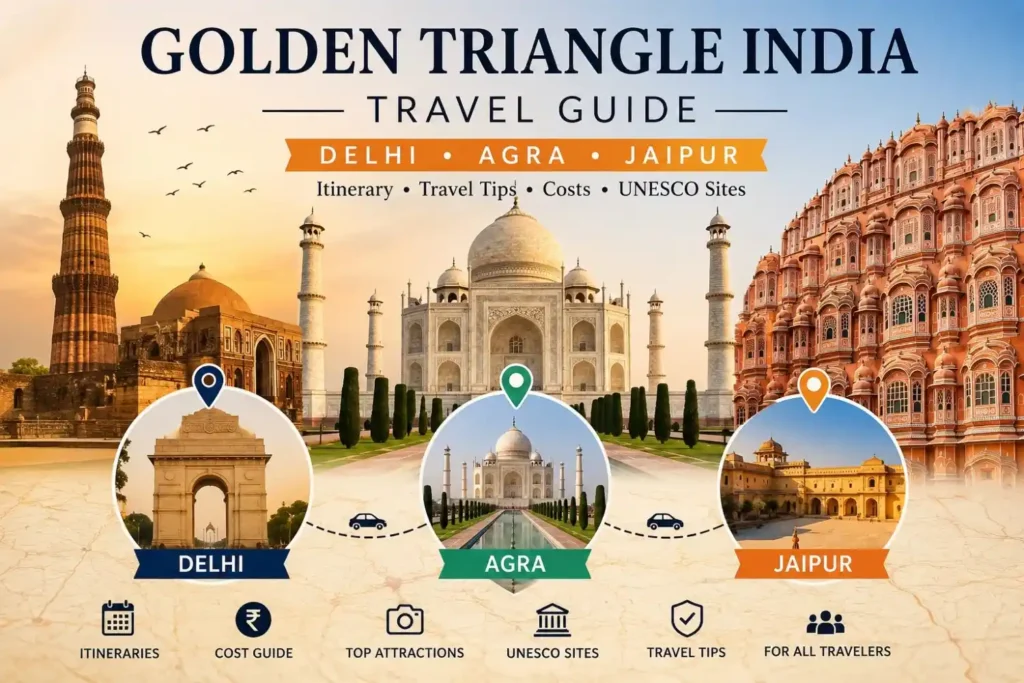
Planning Your First Golden Triangle Tour?
Planning your first trip to India feels exciting, but it can also feel confusing. New cities, different cultures, transport choices, weather, budgets, and safety questions all come at once. When you travel through Delhi, Agra, and Jaipur, good planning makes everything easier.
The Golden Triangle Tour gives first-time travelers a smooth and comfortable way to explore India’s most famous places. It combines history, royal culture, and modern travel comfort in one simple route.
This guide uses real local experience and practical tips to help you plan clearly, avoid common mistakes, and enjoy your journey with confidence from day one.
In the next few minutes, you’ll learn:
• What the Golden Triangle route actually includes
• Why it remains India’s most loved travel circuit
• How many days you truly need and what it realistically costs
• The best season for comfortable sightseeing
• The smartest ways to travel between cities
• Common mistakes first-time travelers should avoid
What Is the Golden Triangle Tour in India?
The Golden Triangle Tour is India’s most famous travel circuit, linking three iconic cities:
• Delhi – the political heart of the country, blending Mughal history with modern India
• Agra – home to the world-renowned Taj Mahal and grand Mughal architecture
• Jaipur – the royal capital of Rajasthan, known for forts, palaces, and vibrant culture
Together, these three cities form a triangular route on the map, hence the name “Golden Triangle.”
What makes this journey so special is balance.
In just one trip, travelers experience:
• Ancient monuments and UNESCO heritage sites
• Royal palaces and desert culture
• Bustling markets and local cuisine
• Modern cities alongside centuries-old history
For first-time visitors to India, the Golden Triangle offers the most complete introduction to the country, combining comfort, culture, and unforgettable landmarks in a short, well-connected route.
It’s not just a tour.
It’s India’s story, told across three extraordinary cities.
Where Is the Golden Triangle in India?
The Golden Triangle is located in North India and connects three of the country’s most iconic destinations: Delhi, Agra, and Jaipur. These cities form a triangular route on the map, which is why the circuit is known as the Golden Triangle of India.
The route covers approximately 720–750 kilometers and can easily be completed by private car, train, or a combination of both.
Golden Triangle Route Overview:
- Delhi – India’s capital city and gateway to the Golden Triangle
- Agra – Home of the world-famous Taj Mahal and Mughal heritage sites
- Jaipur – Rajasthan’s Pink City, known for royal palaces and hill forts
Because the three cities are relatively close to each other, the India Golden Triangle remains the most popular travel circuit for first-time visitors looking to experience history, culture, architecture, and local traditions in a single journey.
How Many Days Are Ideal for the Golden Triangle Tour?
For most travelers, the perfect Golden Triangle experience takes 5 to 7 days. This timeframe allows you to explore each city comfortably without feeling rushed, while still covering India’s most iconic sights.
Here’s how the time usually breaks down:
5 Days golden triangle india tour – Highlights Focused
Ideal if you’re short on time. You’ll see the major landmarks in Delhi, experience the Taj Mahal in Agra, and explore Jaipur’s famous forts and palaces.
6 Days golden triangle india tour – Balanced and Relaxed
The most popular choice. It offers smoother travel days, deeper sightseeing, and time to enjoy local markets, food, and culture without stress.
7 Days golden triangle india tour – Immersive Experience
Perfect for travelers who want a slower pace, cultural activities, photography stops, and optional experiences like heritage walks or village visits.
In short, five days shows you the beauty.
Six days lets you enjoy it comfortably.
Seven days helps you truly feel it.
For first-time visitors to India, a 6 to 7 day Golden Triangle tour delivers the best overall experience.
What Is the Average Golden Triangle Tour Cost?
The Golden Triangle tour cost varies based on hotel category, travel season, and transport style. On average, travelers can expect:
| Budget | ₹25,000 – ₹40,000 |
| Mid-range | ₹45,000 – ₹75,000 |
| Luxury | ₹85,000 – ₹1,20,000+ |
Budget tours cover essential sightseeing with simple hotels and shared transport.
Mid-range tours offer private cars, better hotels, and flexible schedules.
Luxury tours include premium stays, private guides, and curated experiences.
What Is the Best Time to Visit the Golden Triangle?
The best time to visit the Golden Triangle is October to March, when the weather is pleasant and ideal for sightseeing. During these months, days are warm but comfortable, and evenings are cool, making it easier to explore monuments, markets, and outdoor attractions without exhaustion.
This season is perfect for visiting highlights like the Taj Mahal at sunrise, walking through Jaipur’s forts, and exploring Delhi’s historic neighborhoods. It’s also when most cultural festivals take place, adding color and energy to your journey.
Because it’s peak travel season, prices are slightly higher, but the comfort and experience make it the most popular and rewarding time to go, making it the best time to visit India.
Why First-Time Travelers Choose the Golden Triangle
The Golden Triangle is the most popular travel route in India because it’s easy, well connected, and packed with iconic sights, making it perfect for first-time visitors.
Here’s why travelers love it:
• Short travel distances between cities, less time on the road, more time sightseeing
• World-famous UNESCO monuments, including forts, palaces, and historic landmarks
• Wide range of hotels, from budget to luxury
• Smooth transport options by train and private car
• English widely spoken, making travel stress-free
• Safe and tourist-friendly route with strong infrastructure
In just a few days, travelers experience India’s history, culture, food, and royal heritage without complicated planning.
It’s the easiest and most rewarding way to discover India for the first time.
Golden Triangle Route Overview
The Golden Triangle forms a well-connected triangular route between three major cities in North India. Travel distances are short, roads are good, and transport options are reliable, which makes the journey smooth even for first-time visitors.
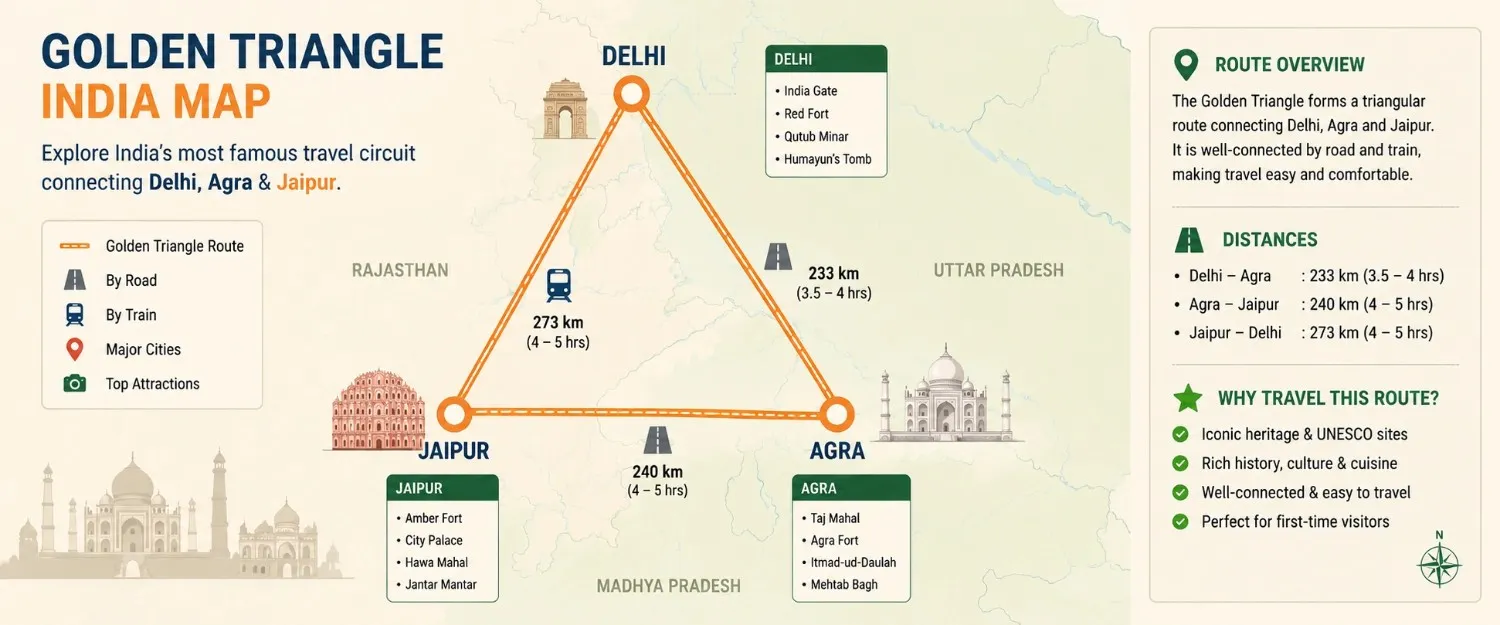
| Route | Distance | Travel Time | Best Option |
| Delhi → Agra | 230 km | 3–4 hours | Express train or private car |
| Agra → Jaipur | 240 km | 4–5 hours | Private car |
| Jaipur → Delhi | 270 km | 4–5 hours | Car or train |
Most travelers begin in Delhi, visit Agra for the Taj Mahal, continue to Jaipur, and return to Delhi for departure.
Golden Triangle India Map & Route
The Golden Triangle India route forms a triangular travel circuit linking Delhi, Agra, and Jaipur. Most travelers begin in Delhi, continue to Agra to visit the Taj Mahal, travel onward to Jaipur for Rajasthan’s royal heritage, and then return to Delhi for departure.
Typical Route:
Delhi → Agra → Jaipur → Delhi
Route Distances:
- Delhi to Agra – Approx. 230 km
- Agra to Jaipur – Approx. 240 km
- Jaipur to Delhi – Approx. 270 km
The route is well connected by expressways, trains, and domestic transport services, making it one of the easiest and most comfortable travel itineraries in India.
For first-time visitors, this route provides the perfect introduction to India’s history, architecture, culture, cuisine, and heritage attractions.
6 Days Golden Triangle Tour Itinerary
This 6 day itinerary is designed for travelers who want to experience the highlights of India without rushing. It balances history, culture, food, and local experiences across Delhi, Agra, and Jaipur.
Day 1 & 2 – Delhi Sightseeing or old Delhi
Delhi offers something in every season, but knowing the best time to visit Delhi helps you explore its history and vibrant streets with ease.
Explore:
• Red Fort
• Qutub Minar
• Humayun’s Tomb
• India Gate
• Lotus Temple
• Chandni Chowk market
Additional Places Worth Visiting in Delhi
Travelers with extra time can also explore:
- Jama Masjid – One of India’s largest mosques
- Raj Ghat – Memorial dedicated to Mahatma Gandhi
- Lodhi Garden – Historic park filled with tombs and green spaces
- Agrasen Ki Baoli – Ancient stepwell in central Delhi
- Akshardham Temple – One of the largest Hindu temple complexes in India
These attractions provide deeper insight into Delhi’s history, architecture, and cultural diversity.
Old Delhi vs New Delhi
Old Delhi offers narrow lanes, spice markets, and Mughal architecture. New Delhi feels spacious, planned, and colonial in style.
Rickshaw Experience Tips
Take a short cycle rickshaw ride in Chandni Chowk for a lively street view. Always agree on the price beforehand.
Street Food Safety
Choose busy stalls, prefer freshly cooked items, and use bottled water.
Day 3 – Agra Heritage Tour
Travel to Agra, home of India’s most iconic monument, and discover why the best time to visit the Taj Mahal enhances every moment of your visit.
Visit:
• Taj Mahal
• Agra Fort
• Mehtab Bagh
• Itmad-ud-Daulah’s Tomb
Sunrise vs Sunset Visit
Sunrise offers softer light and fewer crowds. Sunset gives a golden glow and romantic atmosphere.
Ticket Rules
Book online in advance during peak season to avoid queues.
Photography Tips
Arrive early, explore side angles, and capture reflections from gardens.
Day 4 & 5 – Jaipur Royal Experience
Continue to Jaipur, known as the Pink City – traveling in the best time to visit Jaipur allows you to explore without heat or heavy crowds.
Visit:
• Amber Fort
• City Palace Jaipur
• Hawa Mahal
• Jantar Mantar Jaipur
• Jal Mahal
Additional Places Worth Visiting in Jaipur
Beyond the city’s famous landmarks, travelers often include:
- Nahargarh Fort – Panoramic views over Jaipur
- Jaigarh Fort – Historic military fortification overlooking Amber Fort
- Patrika Gate – One of Jaipur’s most photographed landmarks
- Albert Hall Museum – Rajasthan’s oldest museum
- Chand Baori Stepwell (near Jaipur) – One of India’s most remarkable architectural sites
These attractions add more depth to a Jaipur itinerary and showcase Rajasthan’s royal heritage beyond the traditional tourist route.
Cultural Experiences
• Traditional Rajasthani dinner with folk dance
• Handicraft and gemstone markets
• Block printing workshops
Day 6 – Return or Extension Options
Return to Delhi or extend your journey.
Optional Add-Ons:
• Ranthambore National Park for wildlife safari
• Varanasi for spiritual experience
• Udaipur for romantic lakeside charm
This 6 day plan gives you a complete introduction to India’s heritage, culture, and royal history without feeling rushed.
Golden Triangle vs Other India Routes
Here’s a clear side-by-side comparison to help you choose the right travel route based on time, comfort, and travel style.
Golden Triangle vs Rajasthan Tour
| Travel Time |
Golden Triangle Tour: Short distances, easy transfers Rajasthan Tour: Long drives between cities |
| Cultural Depth |
Golden Triangle Tour: Famous monuments & royal sites Rajasthan Tour: Deep traditional culture & desert heritage |
| Comfort Level |
Golden Triangle Tour: Very comfortable for first-timers Rajasthan Tour: Better for slow travelers |
| Ideal Duration |
Golden Triangle Tour: 5–7 days Rajasthan Tour: 8–14 days |
| Best For |
Golden Triangle Tour: First visit to India Rajasthan Tour: Culture explorers |
Golden Triangle vs South India Tour
| Climate |
Golden Triangle Tour
:
Cooler winters, dry weather
South India Tour : Warm & humid most of the year |
| Main Attractions |
Golden Triangle Tour:
Forts, palaces, Mughal history
South India Tour: Ancient temples, nature, backwaters |
| Landscapes |
Golden Triangle Tour:
Cities & desert regions
South India Tour: Hills, beaches, rivers |
| Travel Style |
Golden Triangle Tour:
Heritage sightseeing
South India Tour: Nature + spirituality |
| Best For |
Golden Triangle Tour:
History lovers & beginners
South India Tour: Relaxed scenic travel |
If it’s your first time in India, the Golden Triangle Tour is the easiest and most balanced choice.
Rajasthan suits longer cultural trips, while South India is ideal for nature and temple experiences.
Want help choosing the right route for your travel dates and budget? Crystal India Holidays can design a custom itinerary for you.
Best Transport Between Cities: Private Car vs Train vs Flight
Traveling between Delhi, Agra, and Jaipur is simple and well connected. Each transport option offers different advantages depending on comfort, budget, and time.
| Option | Pros | Cons | Best For |
| Private Car | Door-to-door comfort, flexible stops, air-conditioned | Slightly higher cost | Families, seniors, relaxed travel |
| Train | Fast, affordable, avoids traffic | Fixed schedules, station transfers | Solo travelers, couples |
| Flight | Quick for longer routes | Limited connections, airport time | Very short itineraries |
Private cars offer the smoothest experience, trains are the best budget choice, and flights are useful only for tight schedules.
Travel Tips for First-Time Visitors to India
For many international travelers, the Golden Triangle serves as their first introduction to India. A few practical travel tips can make the experience smoother and more enjoyable.
Use eSIM or Local SIM Cards
Reliable mobile data helps with maps, ride-hailing apps, hotel communication, and digital payments. Most travelers use Airtel, Jio, or international eSIM services.
Use Uber in Major Cities
Uber operates in Delhi, Agra, and Jaipur and provides transparent pricing compared to negotiating with local drivers.
Carry Small Cash Amounts
Although cards and digital payments are widely accepted, local markets and small vendors often prefer cash.
Dress Comfortably and Respectfully
Lightweight clothing works best throughout the year. Comfortable walking shoes are essential for exploring forts, palaces, and heritage sites.
Stay Hydrated
North India can become very warm outside the winter season. Carry bottled water during sightseeing.
Start Sightseeing Early
Popular attractions such as the Taj Mahal, Amber Fort, and Qutub Minar are less crowded during the morning hours and offer better photography opportunities.
Book Peak Season Travel in Advance
Traveling between October and March requires advance hotel and transport bookings due to high demand.
UNESCO World Heritage Sites in the Golden Triangle
One of the biggest reasons the Golden Triangle India tour remains so popular is the extraordinary concentration of UNESCO World Heritage Sites found across Delhi, Agra, and Jaipur. These globally recognized landmarks showcase India’s rich history, architectural brilliance, and cultural heritage, making the Golden Triangle one of the most rewarding travel circuits in Asia.
Taj Mahal, Agra
The Taj Mahal is India’s most famous monument and one of the New Seven Wonders of the World. Built by Mughal Emperor Shah Jahan in memory of his wife Mumtaz Mahal, this white marble masterpiece attracts millions of visitors every year. Sunrise and sunset are considered the best times to experience its beauty.
Agra Fort, Agra
Located just a few kilometers from the Taj Mahal, Agra Fort served as the main residence of the Mughal emperors for generations. This massive red sandstone fortress contains royal palaces, audience halls, courtyards, and impressive views of the Taj Mahal from across the Yamuna River.
Fatehpur Sikri, Near Agra
Built by Emperor Akbar in the 16th century, Fatehpur Sikri was once the capital of the Mughal Empire. Although it was abandoned due to water shortages, the city remains remarkably preserved and offers visitors a fascinating glimpse into Mughal architecture, planning, and royal life.
Qutub Minar, Delhi
Standing at over 72 meters tall, Qutub Minar is the tallest brick minaret in the world and one of Delhi’s most important historical landmarks. Surrounded by ancient ruins, mosques, and monuments, it represents the early period of Indo-Islamic architecture in India.
Humayun’s Tomb, Delhi
Often considered the architectural inspiration behind the Taj Mahal, Humayun’s Tomb is one of Delhi’s most beautiful Mughal monuments. Its Persian-style gardens, symmetrical design, and impressive red sandstone architecture make it a highlight of any Delhi sightseeing itinerary.
Jantar Mantar, Jaipur
Jantar Mantar in Jaipur is one of the world’s most remarkable astronomical observatories. Built by Maharaja Sawai Jai Singh II, it features massive stone instruments that were used to measure time, track celestial bodies, and study astronomy centuries before modern technology.
Why UNESCO Sites Make the Golden Triangle Special
Few travel routes in the world offer such a remarkable collection of UNESCO World Heritage Sites within a relatively short distance. From Mughal masterpieces and royal forts to astronomical observatories and architectural wonders, these landmarks allow travelers to experience centuries of Indian history, culture, science, and craftsmanship in a single journey.
For travelers interested in heritage tourism, architecture, photography, and cultural exploration, the Golden Triangle of India remains one of the most rewarding UNESCO travel circuits in the world.
Golden Triangle Weather Guide: Month-by-Month Travel Seasons
Understanding the seasons helps you plan the most comfortable and enjoyable Golden Triangle trip.
| Season | Months | Weather | Why Travel |
| Peak Comfort Season | October – March | Cool mornings, pleasant afternoons | Best sightseeing weather, clear skies |
| Summer Season | April – June | Hot days, dry climate | Lower prices, fewer crowds |
| Monsoon Season | July – September | Warm with rainfall | Lush greenery, great photography, quieter travel |
Festival Travel Boosts
October–November: Diwali lights up Delhi and Jaipur with celebrations and markets
March: Holi brings colorful street festivals across North India
January: Republic Day parades in Delhi offer a unique cultural experience
Golden Triangle India Weather Month by Month
Understanding seasonal weather helps travelers choose the most comfortable time for their Golden Triangle India tour.
| January | Cool & Pleasant | Excellent |
| February | Pleasant & Sunny | Excellent |
| March | Warm | Very Good |
| April | Hot | Moderate |
| May | Very Hot | Limited Sightseeing |
| June | Extremely Hot | Not Recommended |
| July | Monsoon Begins | Moderate |
| August | Rainy Season | Moderate |
| September | Improving Weather | Good |
| October | Pleasant | Excellent |
| November | Ideal Conditions | Excellent |
| December | Cool & Comfortable | Excellent |
For most travelers, February, October, November, and December offer the best balance of comfortable temperatures, clear skies, and enjoyable sightseeing conditions.c
Is the Golden Triangle Tour Safe?
Yes, the Golden Triangle is one of the safest and most tourist-friendly travel routes in India. With strong infrastructure, regular police presence at major attractions, and well-developed hotels and transport services, millions of travelers visit this circuit every year without issues.
Safety Tips for Travelers
• Use government-approved drivers and licensed guides for reliable and secure transportation
• Stay in trusted hotels located in central tourist areas with good reviews
• Women travelers should dress modestly, use hotel-arranged transport at night, and stick to busy areas
• Senior travelers benefit from private cars, slower itineraries, and centrally located accommodations
• Keep local emergency numbers and hotel contacts saved on your phone
Who Is the Golden Triangle Tour Perfect For?
The Golden Triangle Tour suits a wide range of travelers because it combines comfort, iconic sights, and easy travel in one well-planned route.
First-time visitors to India will appreciate the smooth transport, famous landmarks, and tourist-friendly infrastructure that make exploring stress free.
Couples and honeymooners enjoy romantic experiences like sunrise at the Taj Mahal, heritage hotels, and cultural dinners in Jaipur.
Families benefit from short travel distances, safe sightseeing areas, and activities that appeal to all age groups.
Senior travelers find the route comfortable with good roads, quality hotels, and the option for relaxed private tours.
Culture lovers get immersed in history, forts, palaces, markets, and traditional performances.
Photography travelers discover endless photo opportunities, from grand monuments to colorful streets and desert landscapes.
The Golden Triangle Tour is ideal for first-time travelers, families, couples, seniors, culture seekers, and photographers who want India’s highlights in a comfortable, well connected itinerary.
Why Choose Traveler Crystal India Holidays
Crystal India Holidays is built around real on-ground experience, not generic tour packages. Every journey is designed by professionals who know the Golden Triangle route inside out and understand what travelers truly need for a smooth and memorable trip.
• Years of experience crafting successful Golden Triangle tours for international and domestic travelers
• Licensed professional guides who share authentic history, culture, and local insights
• Custom itineraries tailored to your travel style, pace, and interests
• Transparent pricing with no hidden charges or last-minute surprises
• 24/7 local support throughout your journey for complete peace of mind
• Verified traveler reviews that reflect consistent quality and trust
With Crystal India Holidays, you’re not just booking a tour.
You’re traveling with experts who care about your experience from start to finish.
FAQ
Q. How many days are required?
5 to 7 days are ideal to comfortably cover Delhi, Agra, and Jaipur without rushing the major attractions.
Q. What is the best month to visit?
October to March offers the most comfortable weather for sightseeing, with pleasant days and cooler evenings.
Q. Is the Taj Mahal open daily?
No. The Taj Mahal is closed on Fridays and open to visitors on all other days.
Q. Is vegetarian food easy to find?
Yes. Vegetarian food is widely available across the Golden Triangle, with many restaurants offering diverse options.
Q. Can seniors travel comfortably?
Yes. With private transport, centrally located hotels, and flexible itineraries, seniors can travel comfortably on this route.
Q. What is the best time to book a Golden Triangle tour in India?
The best time to book a Golden Triangle tour packages is 2–3 months in advance, especially for travel between October and March, to get better prices, hotel availability, and preferred sightseeing slots.
Q. Is the Golden Triangle India worth visiting?
Yes. The Golden Triangle India is the best introduction to India, combining Delhi, Agra, and Jaipur’s top cultural, historical, and architectural attractions in one trip.
Q. Where does the Golden Triangle start and end?
Most Golden Triangle tours start in Delhi, continue to Agra and Jaipur, and end in Delhi.
Q. Can I do the Golden Triangle without a guide?
Yes. The route is well-connected and easy to explore independently, though guides can enhance the experience.
Q. Is the Golden Triangle safe for solo female travelers?
Yes. The Golden Triangle is generally safe for solo female travelers when using trusted transport, hotels, and basic safety precautions.
Q. Do I need malaria tablets for the Golden Triangle India?
Most travelers do not need malaria tablets for Delhi, Agra, and Jaipur, but consulting a travel health professional is recommended.
Q. What should I wear during a Golden Triangle tour?
Wear lightweight, comfortable clothing and walking shoes. Dress modestly when visiting religious and cultural sites.
Start Your Golden Triangle Journey With Confidence
Your journey through Delhi, Agra, and Jaipur deserves expert planning, smooth execution, and complete peace of mind. With Crystal India Holidays, you travel with trusted local professionals who handle every detail, so you can focus on enjoying the experience.
Whether you’re planning your first trip to India or returning for a deeper cultural journey, we design your tour around your comfort, interests, and schedule.