
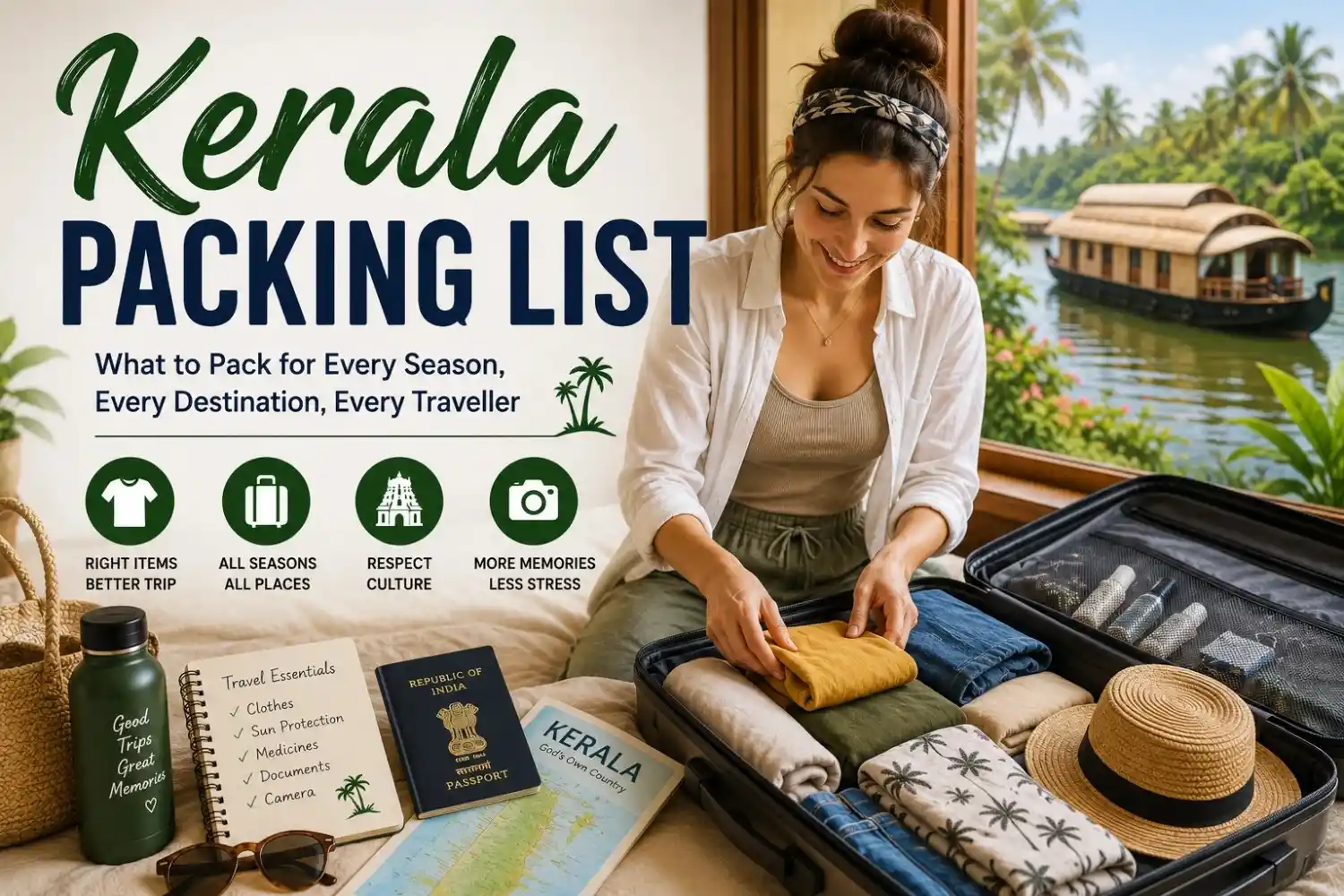
If your flight to Kerala is booked and your suitcase is still empty, here’s the short answer: pack light cotton or linen clothing, one warm layer for the hills, waterproof sandals, sun protection, a compact umbrella, and one modest outfit for temple visits. That covers roughly 80% of what you’ll need. The remaining 20% depends on exactly where in Kerala you’re headed and which season you’re travelling in – which is exactly what this guide walks you through.
At Crystal India Holidays, we’ve planned Kerala itineraries for hundreds of travellers over the years – from first-time honeymooners to families with young kids to solo backpackers doing a quick 5-day loop. The same question comes up in almost every pre-trip call: “What do I actually need to pack?” This guide is our answer, built from real trip planning experience rather than a generic checklist copied from somewhere else.
Why Kerala Packing Trips People Up
Most travellers picture Kerala as one destination with one climate. It isn’t. Within a single week, your itinerary could easily move through three very different environments:
- A houseboat cruise through Alleppey’s backwaters, where the air is humid but breezy
- Munnar’s misty tea estates, where evenings can drop below 15°C even in summer
- A sunset session on a Varkala cliff, in dry, warm coastal air
- A centuries-old temple visit, with a strict, non-negotiable dress code
Each of these calls for slightly different clothing and gear. That’s the real reason most generic packing lists leave travellers either overpacked with things they never touch, or missing the one item – a jacket, an umbrella, a modest outfit – they actually needed. Below, we break Kerala packing down properly: by season, by region, and by category, so you carry only what earns its place in your bag.
Pack According to the Season You’re Travelling In
Kerala’s personality changes across the year. Matching your bag to your travel month solves most packing problems before they start.
Monsoon Season (June–September)
Kerala’s monsoon is dramatic and genuinely beautiful – lush green landscapes, quieter tourist spots, and better rates on houseboats and Ayurveda retreats. It does demand smarter packing, though.
- Quick-dry, breathable fabrics – avoid synthetics that trap moisture and stay damp
- A sturdy umbrella and a lightweight rain jacket; carrying both is worth the space
- Waterproof or quick-dry sandals; skip canvas shoes and sneakers entirely, as they won’t dry in time
- A dry bag or waterproof pouch to protect your phone and camera on boat rides
- One spare outfit sealed in a zip-lock bag, in case your first set gets soaked
- A microfiber travel towel – hotel towels take longer to dry in monsoon humidity
Winter / Peak Season (October–February)
This is Kerala’s most popular travel window, and for good reason – pleasant days, cool evenings, and clear skies for sightseeing.
- Cotton wear for daytime coastal warmth (typically 23–32°C)
- A light jacket, fleece, or heavy shawl for Munnar and Wayanad evenings, which can dip into single digits
- Layering pieces you can add or remove through the day, since temperature swings are more noticeable now
- A light scarf, useful for both warmth and covering up at temples
Summer (March–May)
Hot and humid on the coast, noticeably more comfortable up in the hills.
- Maximum breathability – stick to linen and pure cotton only
- A wide-brimmed hat, sunglasses, and SPF 50+ sunscreen, reapplied through the day
- A cooling towel or a small handheld fan for midday sightseeing, especially in cities like Kochi
- Extra hydration essentials – electrolyte sachets are worth packing given the heat
Pack According to Where You’re Going in Kerala
A single Kerala itinerary often covers multiple micro-climates. Here’s what changes region by region.
Kochi & Fort Kochi Expect 5–8 km of walking through heritage streets, the Dutch Palace, Jewish Town, and the Chinese fishing nets.
- Comfortable, well broken-in walking shoes – new shoes on day one is a common mistake
- One smart-casual outfit for waterfront restaurants and evening cafés
- A fabric tote instead of a backpack – more practical in narrow heritage lanes and easier to carry through markets
Munnar & Wayanad (Hill Stations) Cooler, misty, and occasionally chilly after sunset, even outside winter.
- A light jacket or sweatshirt, packed regardless of season
- Closed walking shoes with grip, useful for tea-estate trails and viewpoints
- A scarf or stole that doubles as both warmth and a quick modesty cover for temple stops along the way
Alleppey & Kumarakom (Backwaters) Humid but breezy once you’re out on the water.
- Slip-on sandals – you’ll remove your shoes constantly boarding and leaving houseboats
- Loose, breathable daywear; houseboats are casual, so there’s no need to dress up
- Mosquito repellent for evening hours on deck, when insects are most active
Varkala & Kovalam (Beaches) Warm, sunny, with the occasional short shower.
- Swimwear for hotel pools and private resort beaches – public beach etiquette in Kerala leans modest, so save swimwear for private areas
- Flip-flops and a light cover-up for beachside walks
- After-sun lotion, since coastal sun is stronger than it feels under the sea breeze
The Complete Category Checklist
Clothing
- 4–5 cotton or linen tops, breathable and light-coloured (dark colours absorb more heat)
- 2–3 bottoms – trousers, shorts, or skirts, based on your comfort and itinerary
- One warm layer – jacket, fleece, or heavy stole – for hill-station evenings
- One modest outfit covering shoulders and knees, kept aside specifically for temple visits
- Sleepwear and undergarments for the full trip duration, plus one or two spares
Footwear – Three Pairs Is Genuinely Enough
- Comfortable walking shoes for city walks and light trails
- Waterproof or quick-dry sandals for beaches, boats, and monsoon days
- Slip-on flip-flops for houseboats and temple entrances, where shoes come off constantly
Health & Safety Kit
- Mosquito repellent – non-negotiable near backwaters and in the evenings
- Sunscreen SPF 50+ and an after-sun lotion or gel
- A basic first-aid kit: ORS sachets, motion-sickness tablets, and any personal prescriptions
- Hand sanitizer and wet wipes, useful across markets, temples, and long road transfers
Documents & Money
- Government-issued photo ID, plus printed or downloaded copies of your bookings
- Emergency contact numbers, including your tour operator’s helpline
- A mix of cash and cards – smaller local shops, boat vendors, and homestays often prefer cash
Electronics & Gadgets
- Phone charger, a universal travel adapter (especially useful for international travellers), and a power bank
- A waterproof phone pouch for boat rides and unexpected showers
- A lightweight camera or GoPro if you want to capture the backwaters without risking your phone
Packing Notes by Traveller Type
Beyond season and region, who you’re travelling with changes a few specifics worth planning for in advance.
Travelling with Family or Young Kids
- Pack a compact first-aid kit with children’s medication, rehydration salts, and any allergy essentials
- Carry a couple of familiar snacks – travel days and unfamiliar food can be a tough combination for younger kids
- A light, foldable stroller or baby carrier works better than a full-size one on houseboats and uneven heritage streets
- Extra sets of clothes for kids, since spills and splashes on backwater trips are common
Solo Female Travellers
- Stick to modest, breathable clothing in public and market areas – it draws far less attention and keeps you comfortable in Kerala’s heat
- Keep a printed copy of your accommodation and emergency contacts separate from your phone, as a backup
- A cross-body bag with a zip closure is more practical and secure than an open tote for solo sightseeing
- Kerala’s tourist circuit is generally well-travelled by solo visitors, and homestay hosts are typically a good source of local safety advice
Honeymoon or Couple Trips
- One or two slightly dressier outfits are worth the extra suitcase space for candlelight dinners or sunset houseboat evenings
- Reef-safe sunscreen is a thoughtful add if a private beach or resort pool is part of the plan
- Pack light – most premium houseboats and resorts offer laundry service, so there’s no need to over-pack for a week-long trip
Senior Travellers
- Comfortable, well-cushioned walking shoes matter even more here, given the uneven paths at heritage sites and tea estates
- A lightweight walking stick or trekking pole is worth carrying for hill-station trails
- Carry all regular medication with a printed prescription copy, along with your usual health kit essentials
- Choose ground-floor or elevator-accessible stays where possible when booking, and mention mobility needs to your travel desk in advance
How to Pack Your Suitcase Efficiently
A well-organised suitcase saves as much stress as a well-planned checklist. A few practical habits make a real difference on a multi-region Kerala trip:
- Roll, don’t fold – rolled clothing takes up less space and creases less than folded stacks, especially useful for cotton and linen
- Use packing cubes or zip bags – separate clothing, electronics, and toiletries into labelled bags so you’re not unpacking the entire suitcase to find one item
- Keep a small daypack ready – for day trips to tea estates, temples, or local markets, you don’t want to carry your full suitcase’s worth of gear
- Pack heavier items at the wheel end – this keeps your suitcase balanced and easier to manoeuvre through airports and narrow houseboat gangways
- Leave 15–20% of your suitcase empty – Kerala’s spice markets, tea shops, and handicraft stores are hard to leave without a few souvenirs
Temple & Cultural Etiquette: What to Pack Specifically for This
Kerala’s temples – including well-known ones like Padmanabhaswamy and Guruvayur – follow a strict dress code, and being turned away at the entrance is a common, entirely avoidable disappointment for first-time visitors.
- Cover shoulders and knees at minimum; some temples require men to wear a mundu or dhoti, available for rent near the entrance
- Carry a light cotton stole or dupatta – it doubles as a modesty cover and quick sun protection between stops
- Footwear comes off before entering, so slip-on shoes save you time and hassle at busy temple complexes
- Avoid sleeveless tops or short shorts near temple grounds, even outside actual temple visiting hours
- Some temples restrict entry for non-Hindus – it’s worth checking specific temple policies in advance if this applies to your group
Common Packing Mistakes First-Time Kerala Travellers Make
Overpacking, more than underpacking, is what actually slows travellers down in Kerala. Watch out for these:
- Carrying heavy woollens – even Munnar’s coldest evenings only call for a light fleece, not a winter jacket
- Packing more than three pairs of shoes – beyond that, it’s dead weight that eats suitcase space
- Bringing expensive jewellery – it adds anxiety and risk without adding real value to a relaxed backwaters-and-hills trip
- Relying on single-use plastic bottles or bags – Kerala’s tourism boards actively discourage this, and most resorts offer refill stations, so a reusable bottle is genuinely more useful
- Skipping the umbrella outside monsoon months – short, sudden showers happen across seasons, not just in June–September
Combining Kerala With a Golden Triangle Tour?
If Kerala is one leg of a longer India journey – for example, a Golden Triangle tour combined with Kerala, covering Delhi, Agra, and Jaipur alongside the southern backwaters – your packing list needs to flex further than a Kerala-only trip.
North India’s Delhi-Agra-Jaipur circuit runs noticeably drier and dustier for most of the year, while Kerala stays humid and green through almost every season. Layering becomes the key strategy: a breathable cotton base for both regions, with one versatile jacket or shawl you can add for cooler North Indian mornings, air-conditioned transfers, and temple visits across both circuits. A separate, sturdier pair of walking shoes is also worth packing if your itinerary includes fort and monument walks in Rajasthan alongside Kerala’s backwater stops.
At Crystal India Holidays, our Golden Triangle Tour with Kerala package is built specifically around this kind of multi-climate, multi-region journey. Our travel desk includes a region-specific packing brief as part of every itinerary consultation, so you’re not left guessing between two very different parts of the country.
Frequently Asked Questions
Do I need an umbrella for a Kerala trip? Yes, especially between June and November. Even outside peak monsoon, short, sudden showers are common across the state, so a compact umbrella is worth the small amount of space it takes in your bag.
Is Kerala safe for solo and family travellers? Yes. Kerala is widely regarded as one of India’s more relaxed, traveller-friendly states, with good tourism infrastructure, well-marked circuits, and low reported crime in tourist areas. Standard travel precautions – staying aware in crowded areas, keeping documents secure – still apply, as they would anywhere.
What is the dress code for Kerala temples? Cover your shoulders and knees at minimum. Many temples require men to wear a mundu or dhoti, and some restrict entry for non-Hindus, so it’s worth checking specific temple rules before your visit.
How many days are enough for a Kerala trip? Five to seven days comfortably covers Kochi, Munnar, and Alleppey. Adding Wayanad or Varkala to the itinerary typically extends this to eight or ten days.
Do I need special gear for a houseboat stay? Slip-on footwear, mosquito repellent, and a light jacket for the evening cover most of it. Most houseboats provide bedding and basic toiletries, so there’s no need to carry extra linen.
What should I avoid packing for Kerala? Heavy woollens, more than three pairs of shoes, valuable jewellery, and single-use plastics. Kerala’s climate and local sustainability practices make all four unnecessary or, in the case of plastics, actively discouraged.
What’s the best time of year to visit Kerala? October to February is generally considered the most comfortable window, with pleasant daytime temperatures and cooler evenings. Monsoon season (June–September) suits travellers who prioritise lush scenery and don’t mind rain-adjusted plans.
Can I do laundry during my Kerala trip instead of packing more clothes? Yes, and it’s a smart way to pack lighter. Most mid-range and premium hotels, resorts, and houseboats offer same-day or next-day laundry service, often for a small fee. Packing for 4–5 days of clothing and doing one laundry cycle mid-trip is usually more practical than carrying a full 10-day wardrobe.
Should I carry an international adapter for Kerala? If you’re travelling from outside India, yes. India uses Type C, D, and M sockets, running on 230V – different from the plug type and voltage used in the US, and different in shape from UK and EU plugs as well. A universal travel adapter covers this, though check whether your electronics also need a separate voltage converter.
Quick Recap: The Kerala Packing List at a Glance
If you’re short on time, here’s the essential list condensed into one final scan before you zip up your bag:
- Clothing: 4–5 cotton/linen tops, 2–3 breathable bottoms, one warm layer, one temple-appropriate modest outfit
- Footwear: Walking shoes, waterproof sandals, slip-on flip-flops
- Weather gear: Compact umbrella, light rain jacket (monsoon), sunscreen SPF 50+, hat and sunglasses (summer)
- Health kit: Mosquito repellent, ORS, motion-sickness tablets, hand sanitizer, personal medication
- Documents: Photo ID, printed booking copies, emergency contacts, mix of cash and cards
- Electronics: Charger, power bank, universal adapter, waterproof phone pouch
- Cultural essentials: Stole or dupatta for temples, modest daywear for public areas
Cross-check this against the season and region sections above for anything specific to your exact itinerary, and you’re genuinely ready to pack.
Final Thoughts
So if a friend ever turns to you and says, “help me pack for my trip to Kerala next week,” you’ll know exactly where to start. Kerala rewards travellers who pack light and pack smart, not travellers who prepare for every possible scenario. Match your bag to the season, the region, and the specific experiences on your itinerary – a houseboat night, a temple visit, a hill-station evening – and you’ll spend less time managing luggage and more time actually enjoying tea estates, backwaters, and beaches.
If you’re still finalising your itinerary or want a packing plan tailored to your exact Kerala route, the Crystal India Holidays travel desk is happy to help, whether you’re planning a standalone Kerala trip or a combined circuit like the Golden Triangle Tour with Kerala.
This guide is reviewed and updated ahead of Kerala’s monsoon and peak-season windows each year, based on real itineraries our travel desk has planned and traveller feedback from completed trips – not generic advice recycled from elsewhere. If you have a specific packing question for your upcoming trip, feel free to reach out to us directly before you travel.

Comment (0)