
Jaipur is one of India’s most iconic cities, and for very good reason. The Pink City of Rajasthan is a living museum of royal architecture, grand forts, ancient observatories, and vibrant bazaars that have captivated travelers for centuries. Founded in 1727 by Maharaja Sawai Jai Singh II, Jaipur became India’s first planned city – and today it holds UNESCO World Heritage status as part of the Walled City of Jaipur.
Whether you are drawn to the dramatic silhouettes of amber-hued forts rising above the Aravalli Hills, the intricate latticed facade of Hawa Mahal, or the mathematical genius of Jantar Mantar, Jaipur delivers a travel experience that is richly layered and endlessly rewarding. It is a cornerstone of India’s famous Golden Triangle circuit, combining seamlessly with Delhi and Agra for a classic Rajasthan journey.
In this guide, we cover the best places to visit in Jaipur – from must-see heritage monuments and serene gardens to sacred temples, cultural villages, and nearby day-trip destinations. Whether you are planning a whirlwind one-day tour or a three-day deep dive into Rajasthan’s royal past, this is your definitive Jaipur travel companion. Let us take you through the top places to visit in Jaipur so you can plan the perfect trip.
Quick List: Best Places to Visit in Jaipur
Here is an at-a-glance overview of the top 10 places to visit in Jaipur – and the full top 15 – that every visitor should know before arriving:
1. Amber Fort – The grandest Rajput fort in Rajasthan
2. Hawa Mahal – Jaipur’s most photographed landmark
3. City Palace – Royal residence and museum complex
4. Jantar Mantar – UNESCO astronomical marvel
5. Nahargarh Fort – Panoramic hilltop fortress
6. Jal Mahal – The Water Palace of Mansagar Lake
7. Jaigarh Fort – Home to the world’s largest cannon on wheels
8. Albert Hall Museum – Rajasthan’s oldest museum
9. Birla Mandir – A peaceful modern marble temple
10. Galtaji Temple – Sacred monkey temple in a gorge
11. Patrika Gate – Jaipur’s stunning gateway of nine gates
12. Sisodia Rani Garden – A terraced Mughal-style garden
13. Kanak Vrindavan Garden – Scenic garden near Amber
14. Govind Dev Ji Temple – The most revered Vaishnava temple in Jaipur
15. Chokhi Dhani – An immersive Rajasthani cultural village
These are the top 5 places to visit in Jaipur that you absolutely cannot miss: Amber Fort, Hawa Mahal, City Palace, Jantar Mantar, and Nahargarh Fort. The remaining ten add extraordinary depth to your visit.
Historical Forts and Palaces in Jaipur
Jaipur’s forts and palaces define the skyline and the soul of the city. These famous places to visit in Jaipur stand as the most compelling reasons millions of tourists make the journey to Rajasthan every year.
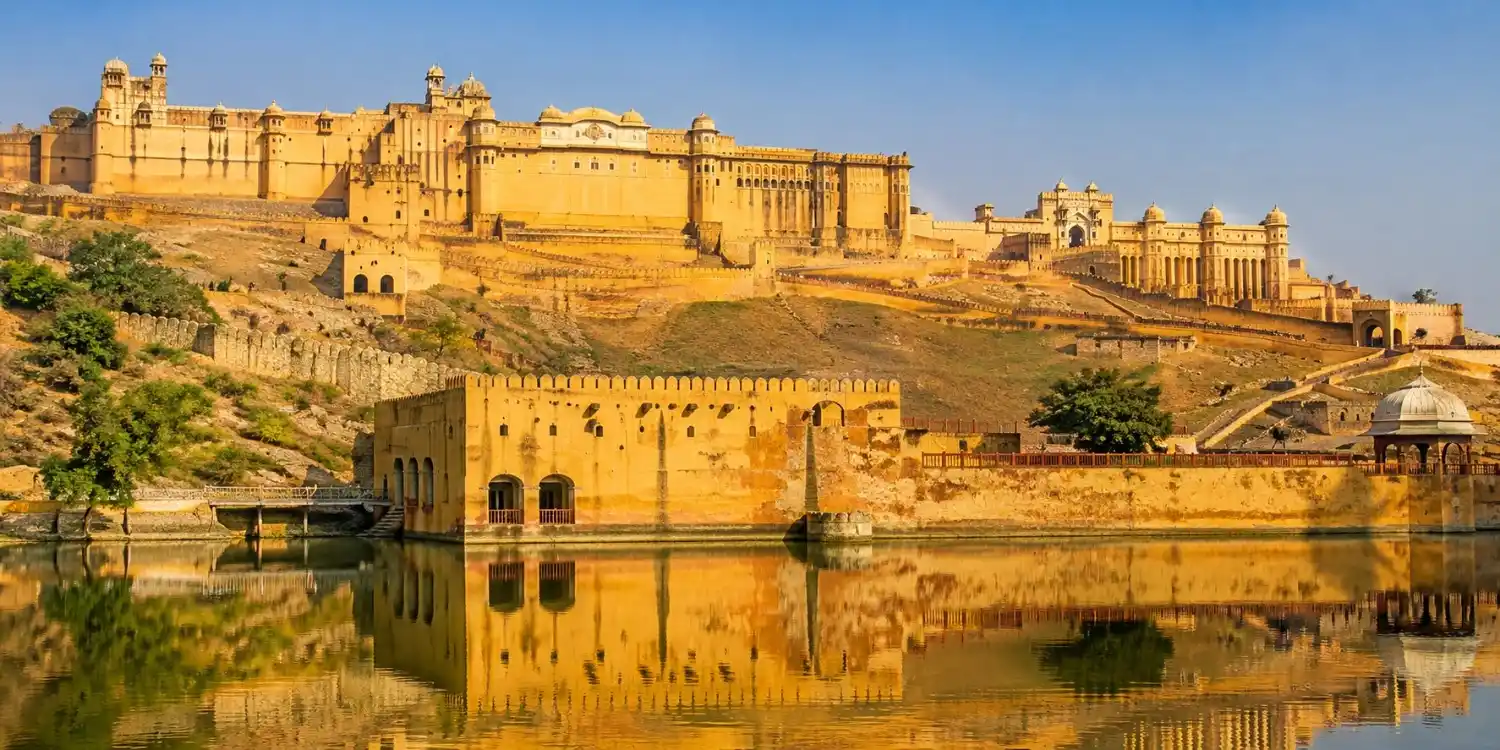
1. Amber Fort
Overview
Amber Fort – also called Amer Fort – sits majestically on a ridge above the town of Amer, roughly 11 km north of Jaipur city. Built primarily in the 16th and 17th centuries by the Kachhwaha Rajput rulers, it is one of the most spectacular Jaipur monuments in all of India.
Why Visit
Amber Fort is the crown jewel of Jaipur sightseeing. Its blend of Rajput and Mughal architecture is unrivaled. The Sheesh Mahal (Hall of Mirrors) alone – where thousands of tiny mirrors create a dazzling indoor universe – justifies the journey. The fort also offers commanding views of Maota Lake and the surrounding Aravalli Hills.
Key Highlights
• Sheesh Mahal (Palace of Mirrors)
• Diwan-i-Aam and Diwan-i-Khas (halls of public and private audience)
• Ganesh Pol – an ornate gateway covered in paintings and inlay work
• Jai Mandir – a magnificently decorated prayer hall
• Sukh Niwas – the pleasure palace with a natural air-conditioning channel
Architecture
The fort is built from pale yellow and pink sandstone and white marble. Successive maharajas expanded it over generations, creating a layered complex of four main sections, each with its own courtyard. The result is one of the finest examples of Rajput military and palace architecture in existence.
Timings
Open daily from 8:00 AM to 5:30 PM. The light and sound show runs in the evening.
Entry Fee
Indian nationals: Rs. 100 | Foreign tourists: Rs. 500 | Additional charges apply for the light and sound show.
Travel Tips
• Arrive by 8:00 AM to beat the crowds and enjoy the morning light on the fort walls.
• Wear comfortable footwear – the ramps and steps are extensive.
• Hire a registered guide at the gate for richer context.
• The elephant ride up is a contested activity; many travelers now prefer the jeep or walking option.
• Photography is best from the road below for the full fort reflection in Maota Lake.
2. Hawa Mahal
Overview
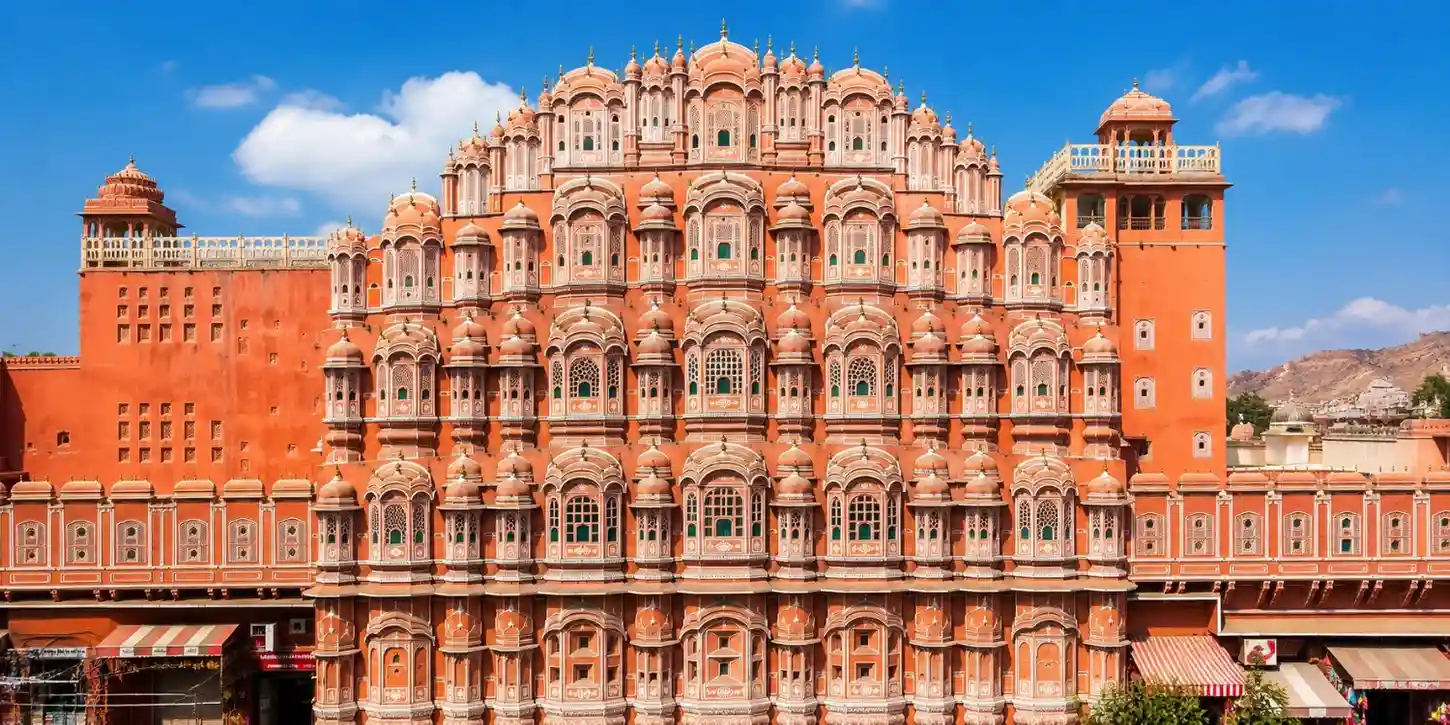
Hawa Mahal – the Palace of Winds – is Jaipur’s most recognizable structure and one of the top places to visit in Jaipur. Built in 1799 by Maharaja Sawai Pratap Singh, this extraordinary five-storey facade features 953 small windows, called jharokhas, intricately carved from pink sandstone.
Why Visit
Hawa Mahal was designed to allow royal women to observe street life and festivals without being seen – a brilliant architectural solution to the demands of purdah. Today, it is one of the most photographed Jaipur landmarks in the world. The early morning light turns the facade a vivid amber-rose, making it a photographer’s dream.
Key Highlights
• 953 latticed jharokha windows across five stories
• The slender chambers creating natural ventilation – the original air-conditioning
• Views over the Old Pink City bazaars from the upper floors
• The small museum inside with royal artifacts
Architecture
The facade resembles the crown of Lord Krishna and is a masterpiece of Rajput craftsmanship. Notably, Hawa Mahal has no front entrance – visitors enter from the rear through the City Palace complex side.
Timings
Open daily from 9:00 AM to 4:30 PM.
Entry Fee
Indian nationals: Rs. 50 | Foreign tourists: Rs. 200
Travel Tips
• Photograph the facade from the tea stall directly opposite – a local classic.
• Visit early morning for the best light and before tour groups arrive.
• Combine with a walk through Johari Bazaar immediately nearby.
3. City Palace
Overview
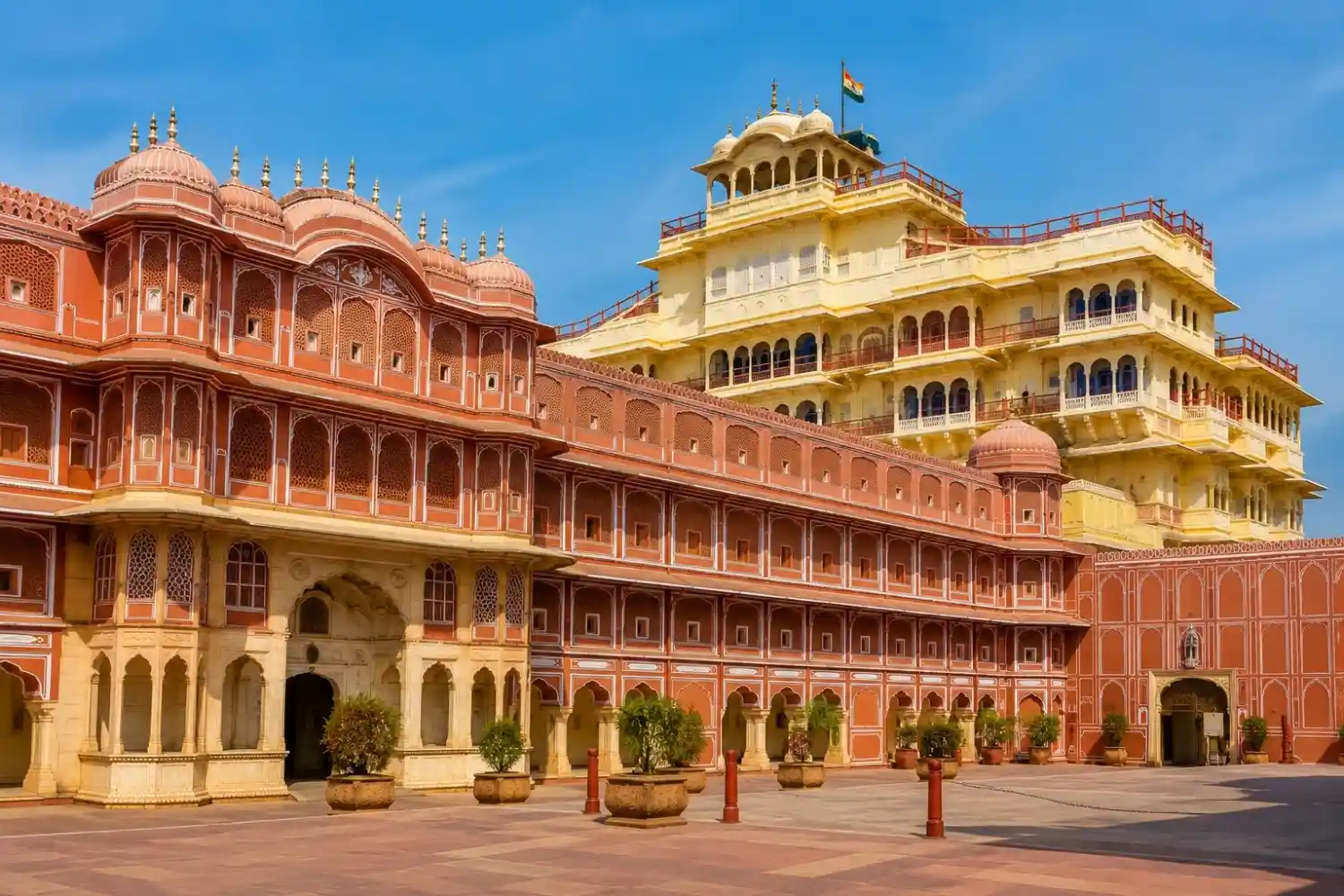
City Palace occupies the heart of the Walled City of Jaipur and has served as the seat of the Jaipur royal family since the city’s founding. It is a grand ensemble of courtyards, gardens, and palaces that now functions partly as a museum and partly as the current residence of the royal family.
Why Visit
City Palace is among the most layered and rewarding Jaipur heritage sites. It contains multiple museums, galleries, and architectural set pieces across a vast compound. The Maharaja Sawai Man Singh II Museum inside the palace is one of the finest collections of royal artifacts in Rajasthan.
Key Highlights
• Mubarak Mahal – a textiles and costume museum in an Indo-Saracenic palace
• Diwan-i-Khas – housing two enormous silver vessels listed in the Guinness World Records
• Chandra Mahal – the seven-storey residential palace (upper floors accessible by premium ticket)
• Pritam Niwas Chowk – four ornate doorways representing the seasons
Timings
Open daily from 9:30 AM to 5:00 PM.
Entry Fee
Indian nationals: Rs. 130 (general) | Foreign tourists: Rs. 700 | Premium tours available at higher rates.
Travel Tips
• Budget at least two hours to do justice to the museum and grounds.
• The royal family still lives in part of the palace – look for the Chandra Mahal flag, which indicates their presence.
• Evening cultural programs are available on specific dates – check in advance.
4. Nahargarh Fort
Overview
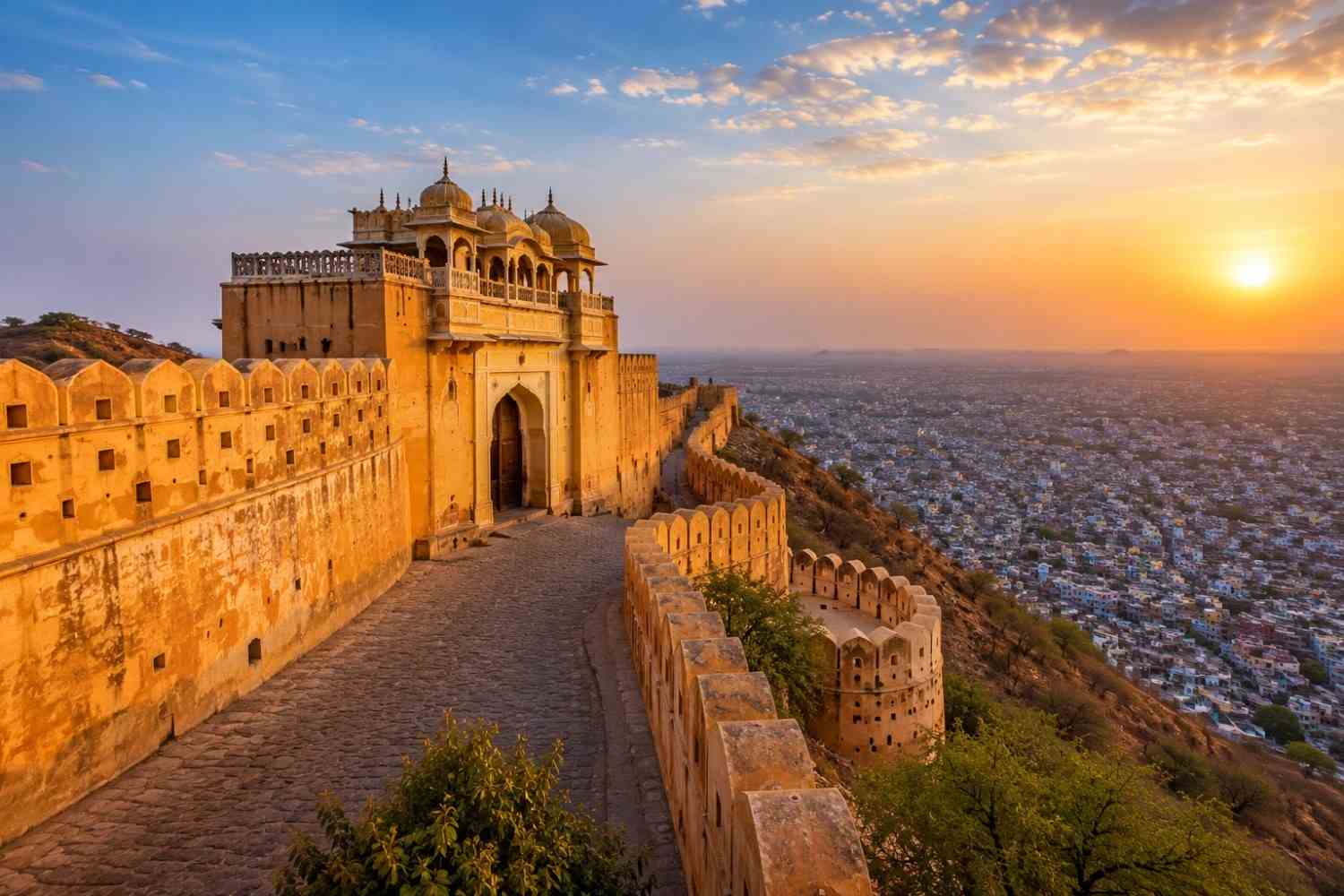
Nahargarh Fort stands sentinel on the Aravalli ridge above Jaipur, offering the most spectacular panoramic view of the Pink City. Built in 1734 by Maharaja Sawai Jai Singh II, the fort served as a defense work and retreat for the royal family.
Why Visit
Nahargarh is one of the best places to visit in Jaipur for sunset views. The fort’s commanding position means you look out over the entire cityscape as the sky turns pink and gold. The Madhavendra Bhawan inside – with its interconnected royal apartments – is a fascinating piece of Jaipur architecture rarely seen elsewhere.
Key Highlights
• Madhavendra Bhawan – a suite of 12 identical apartments built for the maharaja’s 12 queens
• Stunning 360-degree views of Jaipur city
• The cannon installations along the ramparts
• The Wax Museum of Rajasthan located within the complex
Timings
Open daily from 10:00 AM to 5:30 PM. The area around the fort is accessible after sunset as well.
Entry Fee
Indian nationals: Rs. 50 | Foreign tourists: Rs. 200
Travel Tips
• Visit in the late afternoon for the golden-hour sunset – it is truly magnificent.
• The drive up is scenic; auto-rickshaws and cabs are available from the city.
• Combine with Jaigarh Fort, which is linked by a walking path.
5. Jaigarh Fort
Overview
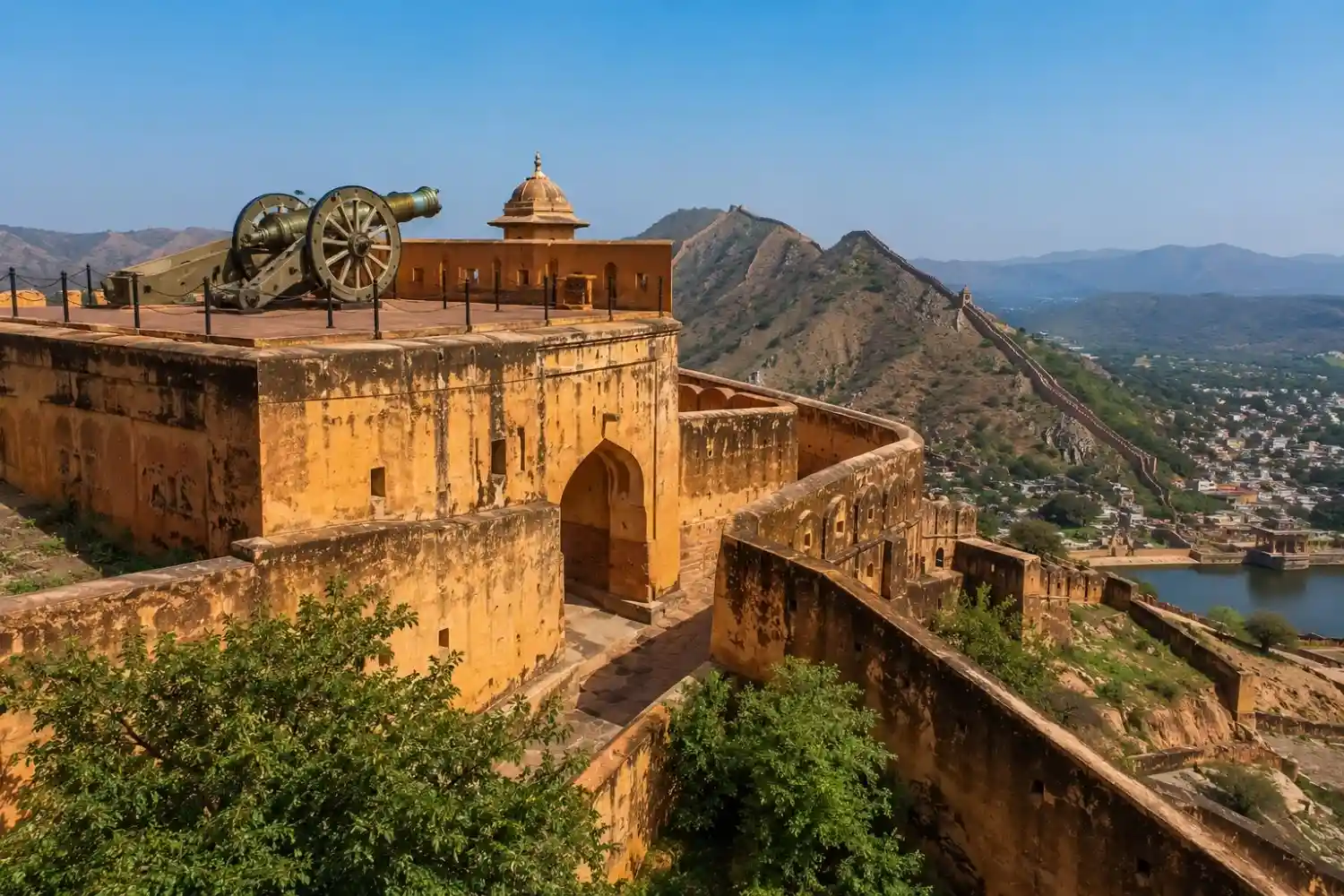
Jaigarh Fort stands high above Amber, connected to the Amber Fort complex by a long underground passage. Built in 1726, it served primarily as the military stronghold and treasure vault of the Jaipur kingdom.
Why Visit
Jaigarh Fort houses Jaivana, the world’s largest cannon on wheels – a remarkable feat of 18th-century engineering. The fort also offers stunning views of Amer and the surrounding Aravalli Hills. It is one of the most authentic and less-crowded of the major Jaipur forts.
Key Highlights
• Jaivana cannon – the world’s largest wheeled cannon, weighing nearly 50 tonnes
• The Laxmi Vilas, Vilas Mandir, and Lalit Mandir palace sections
• A small museum of arms, armor, and stamps
• An elevated reservoir – the largest in Asia at the time of construction
Timings
Open daily from 9:00 AM to 4:30 PM.
Entry Fee
Indian nationals: Rs. 35 | Foreign tourists: Rs. 85 | Combined Amber-Jaigarh tickets are available.
Travel Tips
• A combined ticket covering Amber Fort and Jaigarh Fort offers excellent value.
• The walk between the two forts through the fortified passage is a highlight in itself.
• Photography from the cannon platform offers remarkable landscape shots.
UNESCO and Heritage Attractions
Jantar Mantar
Overview
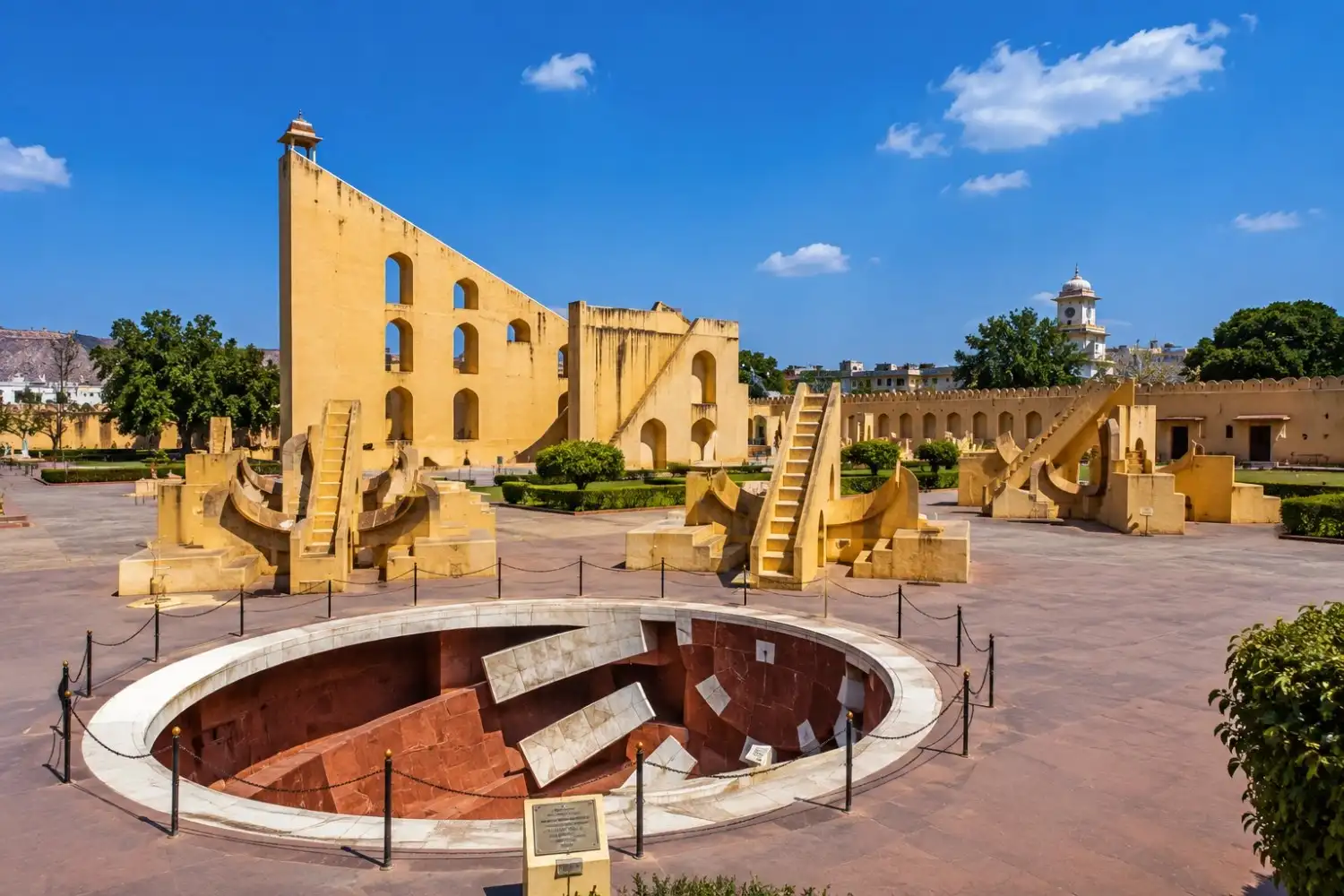
Jantar Mantar is an astronomical observatory built by Maharaja Sawai Jai Singh II between 1724 and 1734. It is one of five observatories he constructed across India and was declared a UNESCO World Heritage Site in 2010 as part of the Hill Forts of Rajasthan – and separately recognized for its outstanding universal value.
UNESCO Importance
The UNESCO designation recognizes Jantar Mantar as an expression of the astronomical skills and cosmological concepts of the court of a Mughal-era Hindu prince. Its nineteen major instruments remain the largest masonry astronomical instruments ever built and represent a high point in the development of pre-telescopic observational astronomy in South Asia.
Highlights
• Samrat Yantra – a giant sundial that measures time to an accuracy of two seconds
• Jai Prakash Yantra – a hemispherical instrument for measuring celestial positions
• Ram Yantra – cylindrical structures for measuring altitude and azimuth
• Rashivalayas Yantra – twelve instruments corresponding to the twelve zodiac signs
Visitor Information
Open daily from 9:00 AM to 4:30 PM. Indian nationals: Rs. 40 | Foreign tourists: Rs. 200. A guide is strongly recommended to make sense of the instruments.
Religious Places to Visit in Jaipur
Jaipur’s temples are among the most spiritually significant and architecturally beautiful in Rajasthan.
Birla Mandir
History and Significance
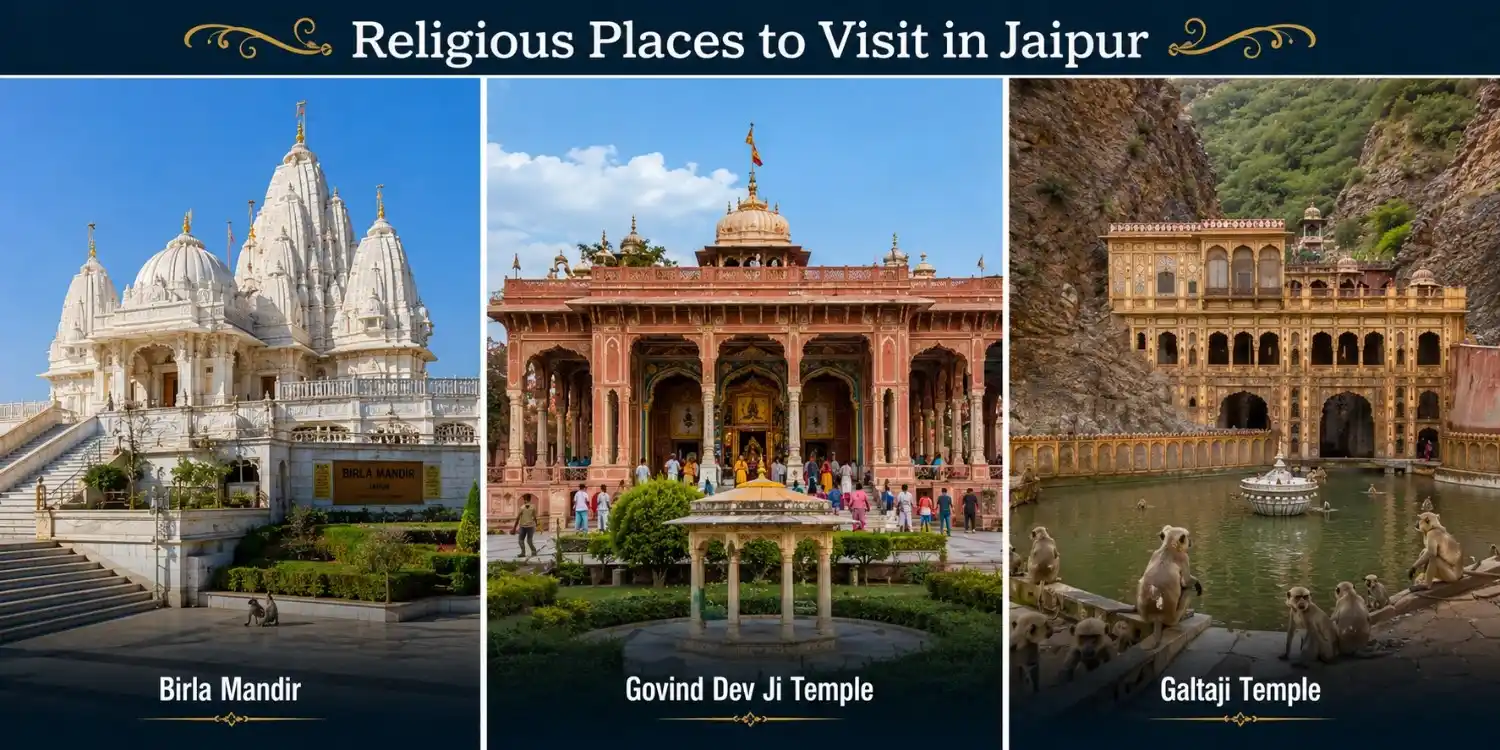
Birla Mandir – formally called Laxmi Narayan Temple – was built in 1988 by the Birla Foundation and is one of the most strikingly beautiful modern temples in India. Perched on a low hill called Moti Dungri, it is built entirely of white Makrana marble and glows spectacularly at night.
Architecture
The temple blends traditional Hindu temple architecture with modern design sensibilities. Its three distinctive white domes are visible from much of the city. The interiors feature images of Lord Vishnu and Goddess Lakshmi, surrounded by intricate marble carvings depicting scenes from Hindu scriptures.
Timings
Open daily from 8:00 AM to 12:00 PM and 4:00 PM to 8:00 PM. Photography is restricted inside.
Govind Dev Ji Temple
History and Significance
Govind Dev Ji Temple, located within the City Palace complex gardens, is the most revered Vaishnava temple in Jaipur. The presiding deity – a black stone image of Lord Krishna as Govind Dev Ji – was originally installed in Vrindavan and brought to Jaipur in 1735 to protect it from the armies of Aurangzeb. The Jaipur royal family is devoted to this temple; the maharajas considered themselves servants of Govind Dev Ji.
Architecture and Timings
The temple is an 18th-century structure set in spacious gardens with an impressive hall. It follows a unique darshan schedule with eight daily prayer sessions (aarti timings). The most popular sessions are at dawn and in the late evening. Expect large crowds during festivals.
Galtaji Temple
Overview
Galtaji is an ancient Hindu pilgrimage site set within a natural gorge in the Aravalli Hills, roughly 10 km east of Jaipur. Known popularly as the Monkey Temple because of the hundreds of langurs that inhabit the complex, Galtaji is actually a series of sacred kunds (freshwater tanks) and temples carved into the hillside.
Architecture and Spiritual Significance
The complex dates from the 18th century, though the site has been sacred for far longer. The chief temples are dedicated to Surya (the Sun God) and Balaji (Lord Hanuman). The natural spring that feeds the kunds is considered holy; pilgrims bathe here throughout the year. The Galta Kund at the top of the gorge is the most sacred.
Timings
Open throughout the day. Entry is free. Visit early morning to witness pilgrims bathing and for the quietest experience.
Museums and Cultural Attractions
Albert Hall Museum
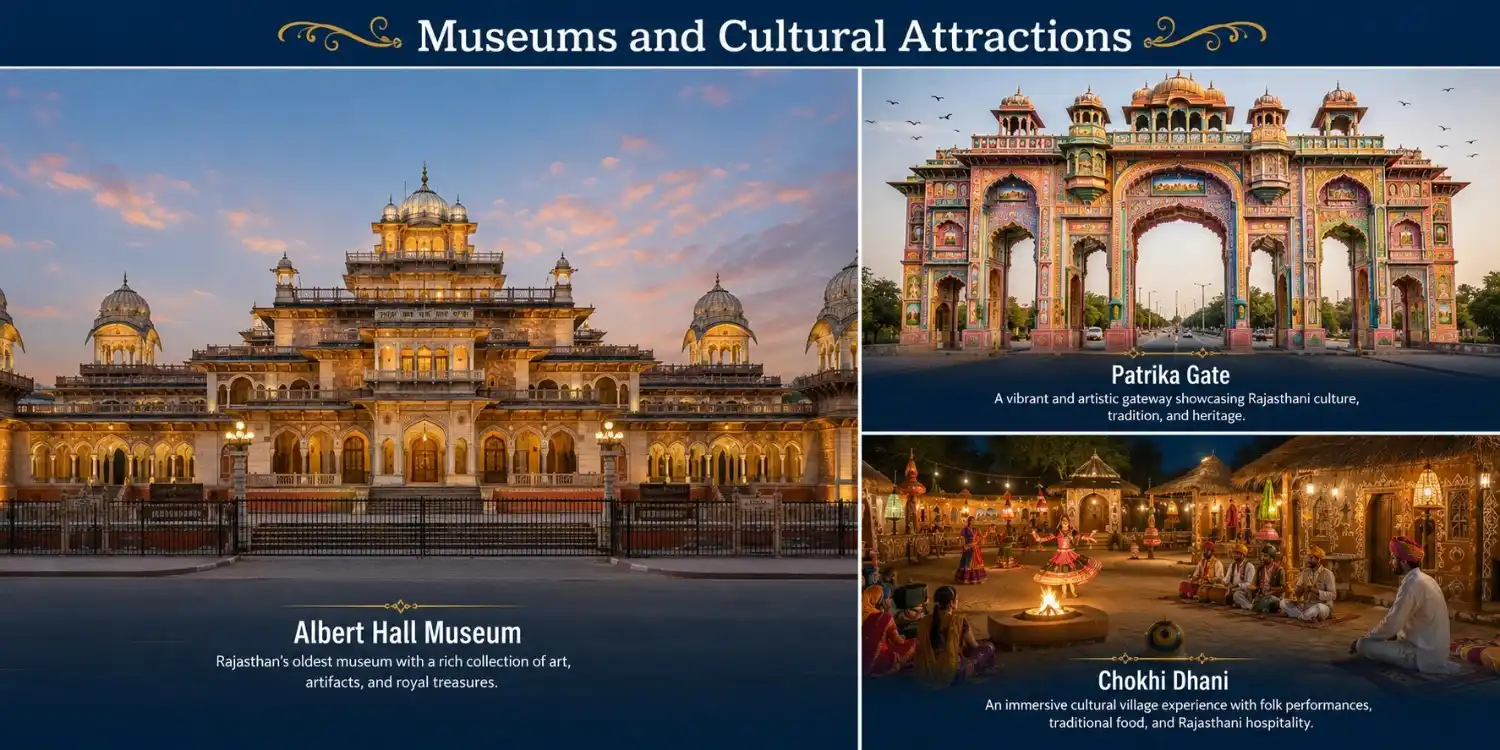
The Albert Hall Museum is Rajasthan’s oldest museum, housed in a magnificent Indo-Saracenic building that dominates the center of Jaipur’s Ram Niwas Garden. Built in 1876 and opened to the public in 1887, the building itself is as much an attraction as its contents.
The museum’s collection spans textiles, carpets, ivory, stone, metal, crystal, and pottery – representing craft traditions from across Rajasthan and beyond. Highlights include an Egyptian mummy, a remarkable collection of miniature paintings, and an extraordinary variety of decorative arts from the Jaipur royal collection. At night, the illuminated facade is one of the most beautiful sights in the city.
Timings: 9:00 AM to 5:00 PM and 7:00 PM to 10:00 PM (night hours). Entry: Rs. 40 (Indian) | Rs. 300 (foreign).
Patrika Gate
Patrika Gate is Jaipur’s newest and most visually dramatic landmark, inaugurated in 2016 as a tribute to the Pink City’s heritage. Built at the Jawahar Circle end of Jawaharlal Nehru Marg, it is the ninth gate of Jaipur – a city historically known for its eight original gates.
The gate is adorned with intricate hand-painted murals depicting scenes from Rajasthani culture, festivals, and history. The vibrant colors and craftsmanship are extraordinary. It has quickly become one of the most photographed new places to visit in Jaipur, especially beautiful in the golden hour when the paintings glow warmly.
Chokhi Dhani
Chokhi Dhani is a cultural village resort located roughly 20 km south of Jaipur on the Tonk Road. It recreates an authentic Rajasthani village experience within a single large compound, making it a fascinating window into the culture of rural Rajasthan.
Visitors can observe folk dancers, puppet shows, camel rides, traditional crafts, and cultural performances. The experience is particularly immersive in the evening when the complex lights up with lanterns and fires. Traditional Rajasthani thali meals are served on leaf plates by artisans in costume – a complete cultural immersion.
Timings: 5:00 PM onwards (daily). Tickets include all cultural activities; food is charged separately.
Gardens and Scenic Places in Jaipur
Jal Mahal
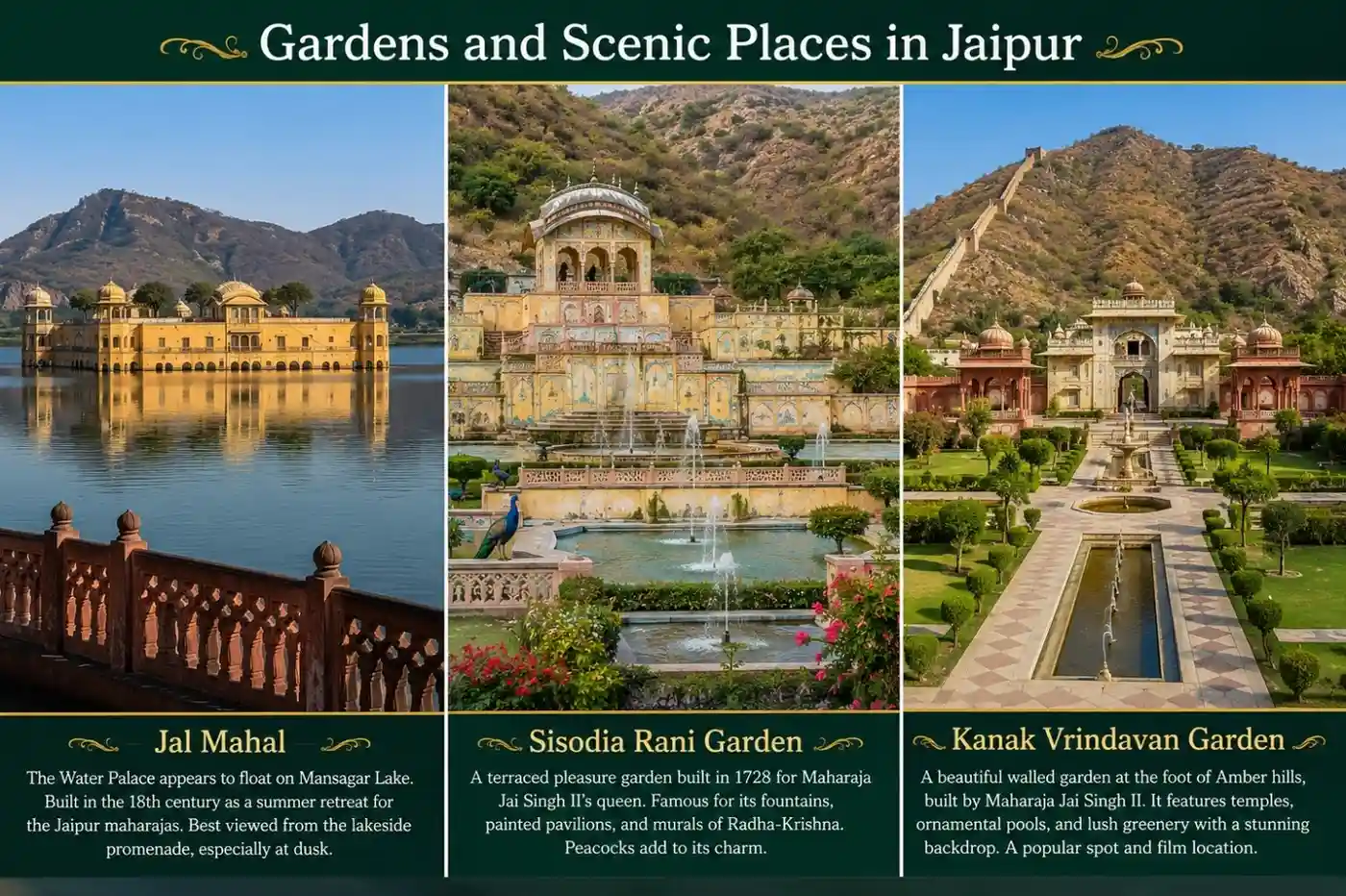
Jal Mahal – the Water Palace – is one of the most evocative images in all of Rajasthan. The palace appears to float on the surface of Mansagar Lake, situated on the road between Jaipur and Amber. Built in the 18th century as a summer retreat and hunting lodge for the Jaipur maharajas, it is a five-storey structure with four floors submerged below the waterline.
The palace is currently closed to the general public as restoration work continues. However, the lakeside promenade and the view of the palace from the shore is spectacular at any time of day – and particularly magical at dusk when the palace is reflected in the still water. It is among the most popular photography spots in Jaipur.
Sisodia Rani Garden
Sisodia Rani Garden is a terraced pleasure garden built in 1728 by Maharaja Sawai Jai Singh II for his second queen, the Sisodia princess from Udaipur. Located about 8 km from Jaipur on the Agra road, it is one of the most peaceful and romantic spots near the city.
The garden is designed on multiple levels with fountains, painted pavilions, and murals depicting the love story of Radha and Krishna. Peacocks wander freely through the terraces. It is a quiet retreat from the bustle of central Jaipur and especially beautiful in the cooler months.
Kanak Vrindavan Garden
Kanak Vrindavan Garden lies at the foot of the Amber hills, close to Jal Mahal and Amber Fort on the northern approach to the city. Built by Maharaja Sawai Jai Singh II, this walled garden complex contains temples dedicated to Lord Vishnu and ornamental pools surrounded by manicured gardens.
The garden’s backdrop – a wall of rocky hills on one side, the glittering reservoir on the other – creates a distinctly cinematic setting. It has been a popular Bollywood filming location. Entry is affordable and the garden makes an excellent short stop when traveling between Jaipur and Amber.
Places to Visit in Jaipur with Family
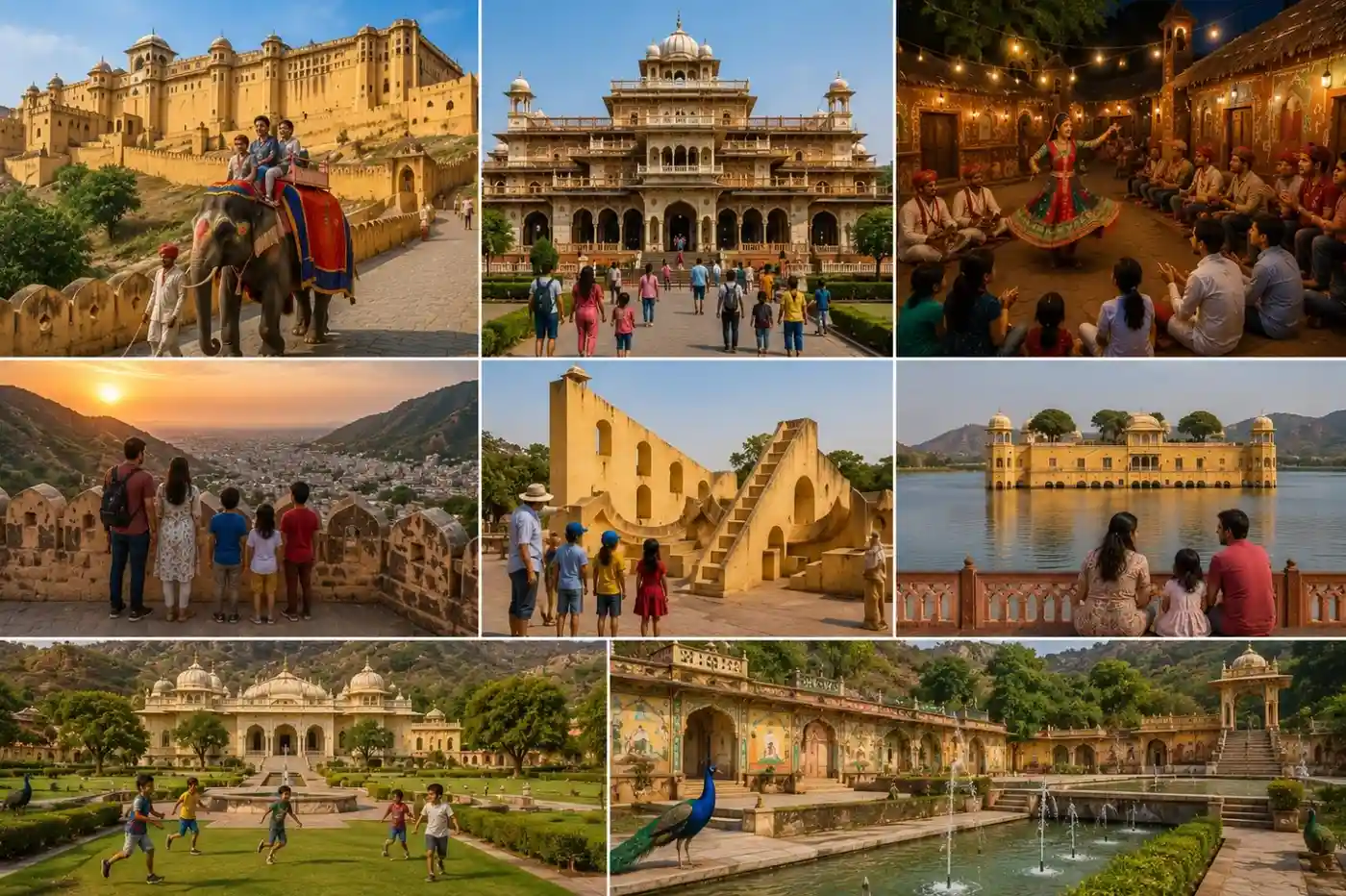
Jaipur is one of India’s most family-friendly destinations. The best places to visit in Jaipur with family combine education, visual spectacle, and open spaces that children and adults can both enjoy.
• Amber Fort: The elephant stables, the sprawling courtyards, and the Sheesh Mahal are genuinely exciting for children.
• Albert Hall Museum: The Egyptian mummy and the variety of artifacts keep young minds engaged.
• Chokhi Dhani: Puppet shows, camel rides, and folk performances make it one of the most entertaining stops for families.
• Nahargarh Fort: The spacious ramparts and open hilltop views are energizing for families who enjoy exploring.
• Jal Mahal: The lakeside promenade is perfect for leisurely family walks with excellent views.
• Jantar Mantar: Children are fascinated by the giant astronomical instruments – make it educational with a guide.
• Kanak Vrindavan Garden: Open lawns and peaceful surroundings give younger children room to move.
The best places to visit in Jaipur with family are generally the forts and museums, which combine historical intrigue with enough visual drama to hold everyone’s attention. Avoid very early morning or peak afternoon heat with young children; midday visits between October and March are ideal.
Places to Visit in Jaipur for Couples
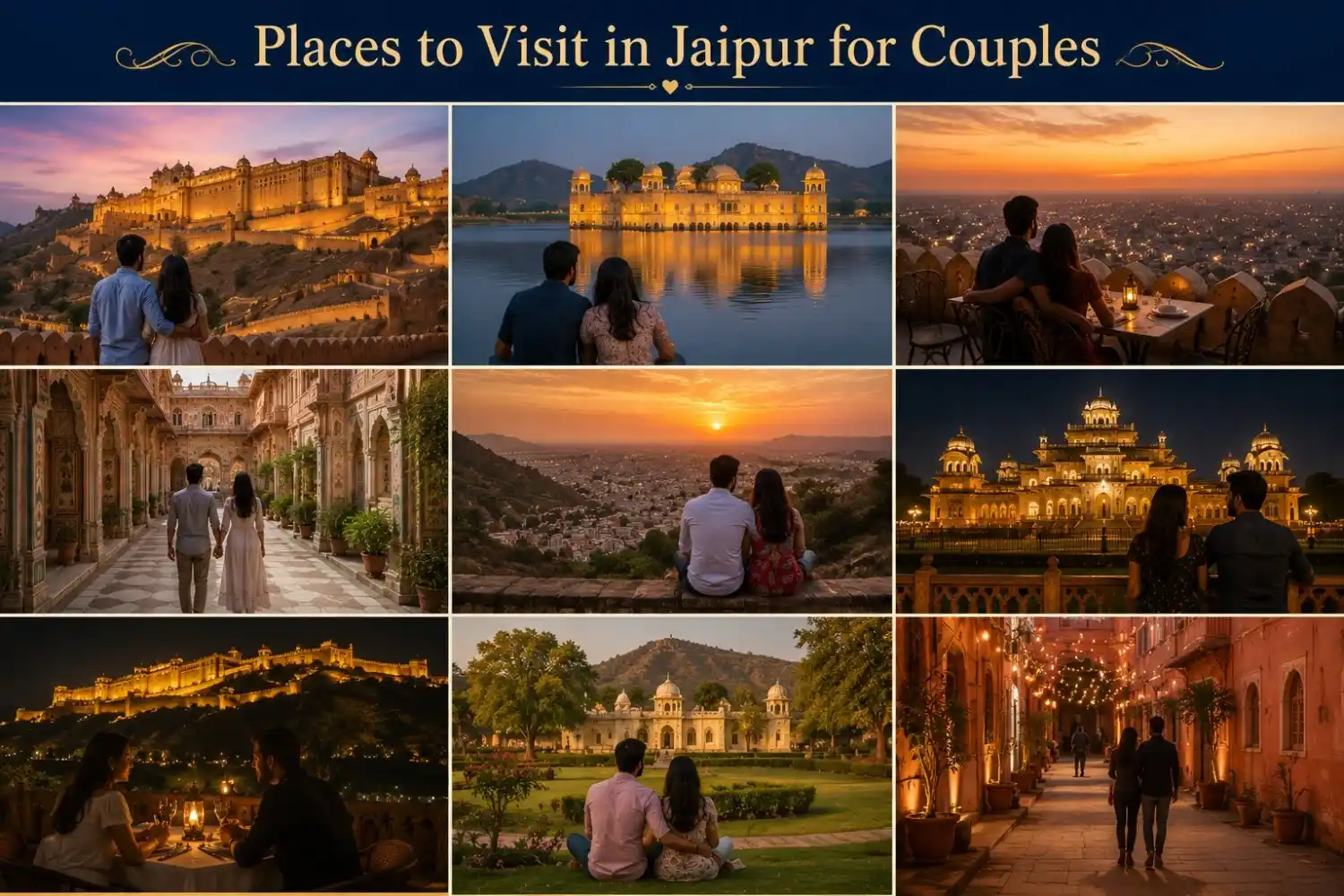
Jaipur’s romantic architecture and garden retreats make it one of the most popular honeymoon and couple destinations in India. Places to visit in Jaipur for couples emphasize beauty, tranquility, and those unforgettable golden-light moments.
• Sisodia Rani Garden: Designed as a love token for a royal queen, this terraced garden with painted murals of Radha-Krishna is the most romantic spot in Jaipur.
• Nahargarh Fort at Sunset: Watching the sun set over the Pink City from Nahargarh’s ramparts is a truly unforgettable moment for couples.
• Jal Mahal Promenade: An evening stroll along Mansagar Lake with the illuminated Water Palace as a backdrop is genuinely magical.
• City Palace: The courtyard architecture and the quieter sections of the museum complex create an elegant, unhurried space for couples.
• Kanak Vrindavan Garden: Scenic and peaceful, ideal for photographs and quiet time together.
• Amber Fort Evening Light Show: The sound and light show narrating the fort’s history is a memorable evening experience for couples.
These places to visit in Jaipur for couples are best enjoyed in the cooler months from October to February, when the weather is pleasant enough for long explorations and sunset views.
Best Places to Visit in Jaipur with Friends
Jaipur with a group of friends is an exhilarating experience. The best places to visit in Jaipur with friends combine large-scale spectacle, exploration, and those shared moments of discovery that make travel memorable.
• Nahargarh Fort: The ramparts, the hilltop canteen, and the panoramic views make this a perennial favorite for friend groups.
• Amber Fort: An entire morning could be spent exploring the complex together.
• Chokhi Dhani: An immersive evening of Rajasthani culture, food, and folk entertainment is one of the most fun places to visit in Jaipur as a group.
• Albert Hall Museum Night Visit: The illuminated museum complex is particularly atmospheric.
• Patrika Gate: The painted murals make it one of the best photography spots in the city for groups.
• Johari Bazaar and Bapu Bazaar: A shared afternoon of exploring the historic bazaars is an excellent group activity.
These fun places to visit in Jaipur are ideal for energetic friend groups who want to combine history, culture, and lively street experiences.
Places to Visit in Jaipur at Night
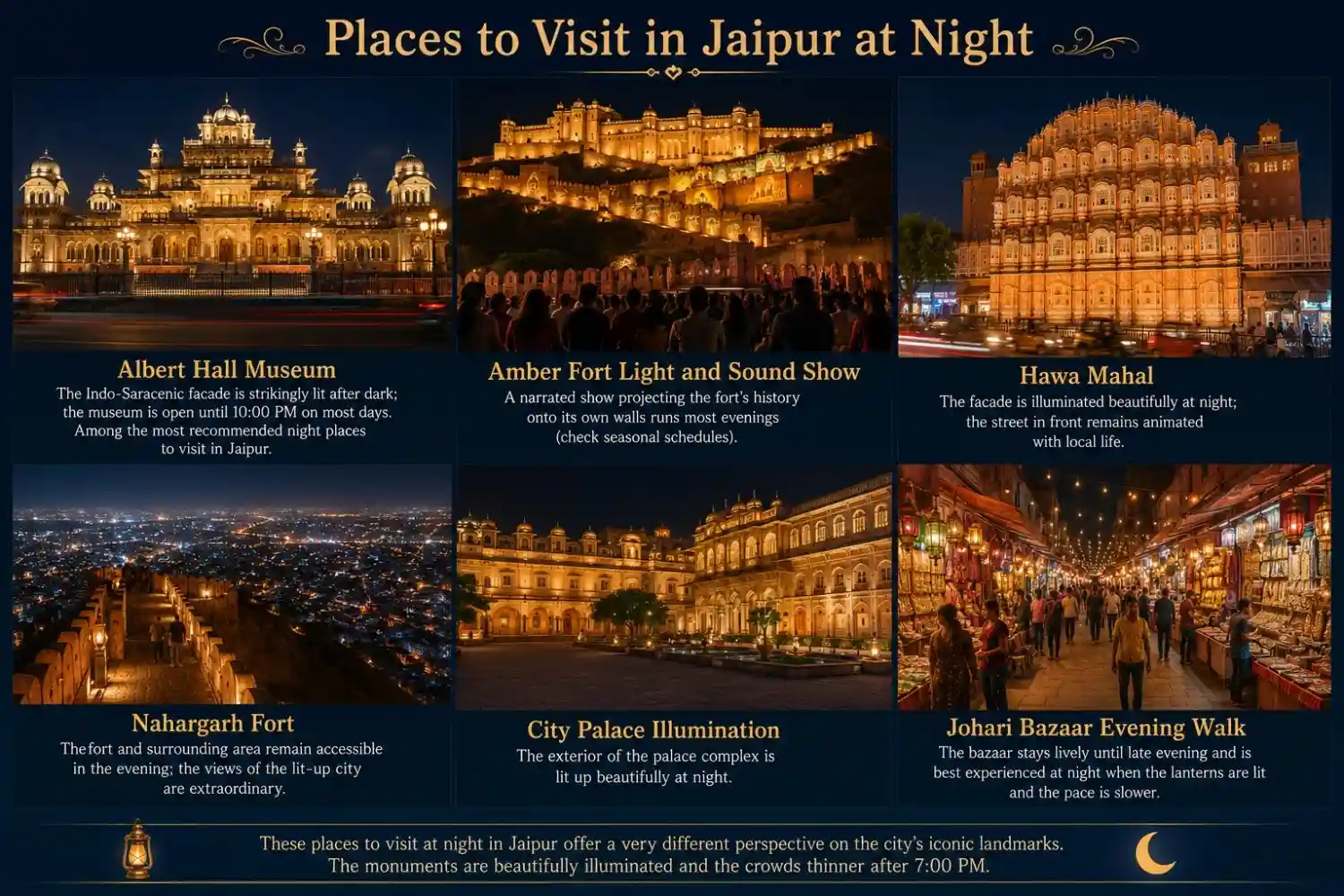
Jaipur transforms after dark. The illuminated monuments and vibrant bazaars give the Pink City a completely different and equally captivating character. Here are the best places to visit in Jaipur at night:
• Albert Hall Museum: The Indo-Saracenic facade is strikingly lit after dark; the museum is open until 10:00 PM on most days. Among the most recommended night places to visit in Jaipur.
• Amber Fort Light and Sound Show: A narrated show projecting the fort’s history onto its own walls runs most evenings (check seasonal schedules).
• Hawa Mahal: The facade is illuminated beautifully at night; the street in front remains animated with local life.
• Nahargarh Fort: The fort and surrounding area remain accessible in the evening; the views of the lit-up city are extraordinary.
• City Palace Illumination: The exterior of the palace complex is lit up beautifully at night.
• Johari Bazaar Evening Walk: The bazaar stays lively until late evening and is best experienced at night when the lanterns are lit and the pace is slower.
These places to visit at night in Jaipur offer a very different perspective on the city’s iconic landmarks. The monuments are beautifully illuminated and the crowds thinner after 7:00 PM.
Places to Visit in Jaipur for Shopping
Jaipur is one of India’s greatest shopping destinations. The places to visit in Jaipur for shopping are largely clustered in and around the Walled City and offer everything from precious gemstones to handblock-printed textiles.
• Johari Bazaar: The heart of Jaipur’s gem and jewelry trade. This is the right place to visit in Jaipur for shopping if you are looking for Kundan, polki, and meenakari jewelry.
• Bapu Bazaar: The most accessible market for tourists, selling textiles, leather shoes, quilts, and Rajasthani handicrafts at relatively fixed prices.
• Tripolia Bazaar: Specializes in lac bangles, brass, and metalware. Also excellent for block-printed fabrics and traditional Rajasthani footwear (mojris).
• Chandpole Market: Best known for woodwork, blue pottery, and marble artifacts – ideal for heritage crafts and souvenirs.
Always bargain politely in the smaller shops. Government-certified emporiums like Rajasthali offer fixed prices and quality guarantees if you prefer a more straightforward shopping experience.
Places to Visit in Jaipur Near Railway Station
Jaipur Railway Station is conveniently located near several key attractions. If you have limited time between trains or are based near the station, these are the most accessible places to visit in Jaipur near railway station:
• Hawa Mahal: Approximately 2 km from the railway station – a 10-minute auto-rickshaw ride.
• City Palace and Jantar Mantar: Adjacent to each other and roughly 2.5 km from the station.
• Johari Bazaar and Bapu Bazaar: The shopping bazaars begin just 1.5 km from the station.
• Albert Hall Museum: Located in Ram Niwas Garden, about 1.5 km from the station – easily walkable.
• Birla Mandir: About 3 km from the station, a short auto ride.
The central attractions of the Walled City are all within a compact radius of the railway station, making Jaipur very manageable even for transit visitors.
Nearby Places to Visit from Jaipur
Jaipur’s location in eastern Rajasthan places it within reach of some extraordinary destinations. These nearby places to visit in Jaipur – reachable as day trips – dramatically expand your Rajasthan experience.
Samode Palace (45 km)
Samode is a beautifully preserved heritage village with a palace that has been converted into one of Rajasthan’s finest boutique hotels. The Sheesh Mahal at Samode Palace rivals even Amber Fort’s mirror work. The drive through the Aravalli foothills is scenic and the village itself is genuinely unspoiled.
Chand Baori / Abhaneri (95 km)
Chand Baori at Abhaneri village is one of India’s most astonishing stepwells – a 13-storey, 3,500-step geometric marvel built in the 8th century. Arranged in perfect symmetrical patterns that seem almost computer-generated, it is one of the most photographed nearby places to visit in Jaipur. Combine with the Harshat Mata Temple adjacent to the stepwell.
Bhangarh Fort (85 km)
Bhangarh Fort is one of the most atmospheric and historically layered ruins in Rajasthan. Built in the 16th century, the fort town of Bhangarh was allegedly abandoned after a curse and remains largely intact as a ghost town. The Archaeological Survey of India prohibits entry after sunset. It is a fascinating heritage site and one of the most distinctive day trips from Jaipur.
New Places to Visit in Jaipur
Jaipur’s newer attractions complement its ancient heritage beautifully. These are the new places to visit in Jaipur that have opened or gained prominence in recent years:
• Patrika Gate (2016): The most spectacular of Jaipur’s new landmarks, this painted gateway at Jawahar Circle is an architectural tribute to the Pink City’s heritage crafts and festivals. Beautifully illuminated at night.
• Jawahar Circle: Adjacent to Patrika Gate, Jawahar Circle features the largest circular garden in Asia, with fountains, walking paths, and a musical fountain that operates in the evenings.
• World Trade Park: A modern luxury mall and business complex that represents Jaipur’s rapid development alongside its heritage – an interesting counterpoint to the old city.
• Anokhi Museum of Hand Printing: Dedicated to the traditional art of block printing from Rajasthan, this museum in Amber offers a thoughtful cultural experience beyond the standard monument circuit.
Places to Visit in Jaipur in One Day
If you have just one day in Jaipur, here is a focused itinerary covering the most essential places to visit in Jaipur in one day. This itinerary works best with a private driver or guided tour. Places to visit in Jaipur in 1 day require an early start.
| Time | Place | Duration | Notes |
|---|---|---|---|
| 7:30 AM | Amber Fort | 2 Hours | Arrive at opening to beat crowds |
| 10:00 AM | Jal Mahal | 20 Mins | Stop for photographs en route to city |
| 10:30 AM | Hawa Mahal | 45 Mins | Exterior + interior museum |
| 11:30 AM | City Palace | 1.5 Hours | Includes Jantar Mantar nearby |
| 1:00 PM | Johari Bazaar | 45 Mins | Lunch break + quick market walk |
| 2:00 PM | Jantar Mantar | 45 Mins | If not covered with City Palace |
| 3:00 PM | Albert Hall Museum | 1 Hour | Rajasthan’s finest museum |
| 4:30 PM | Nahargarh Fort | 1.5 Hours | Sunset views over the city |
| 7:00 PM | Albert Hall (Night) | 30 Mins | Illuminated facade views |
Places to Visit in Jaipur in 2 Days
Jaipur Tour Package For Family For 2 Days
Two days allow a much more relaxed and comprehensive exploration. These places to visit in Jaipur in 2 days cover all major monuments and add cultural depth. Jaipur places to visit in 2 days are best organized by geographic cluster.
| Day | Time | Place | Notes |
|---|---|---|---|
| Day 1 | 7:30 AM | Amber Fort | Full exploration including Sheesh Mahal |
| Day 1 | 10:30 AM | Jaigarh Fort | Connected to Amber – do together |
| Day 1 | 1:00 PM | Nahargarh Fort | Lunch at fort canteen + sunset |
| Day 1 | Evening | Jal Mahal Promenade | Sunset walk, photography |
| Day 2 | 9:00 AM | Hawa Mahal | Early morning light is best |
| Day 2 | 10:00 AM | City Palace | Museum + Chandra Mahal |
| Day 2 | 12:00 PM | Jantar Mantar | UNESCO observatory |
| Day 2 | 1:30 PM | Johari Bazaar | Lunch + shopping |
| Day 2 | 3:00 PM | Albert Hall Museum | Full collection |
| Day 2 | 5:00 PM | Birla Mandir | Sunset temple visit |
| Day 2 | Evening | Chokhi Dhani | Cultural village dinner |
Places to Visit in Jaipur in 3 Days
Three days in Jaipur allow you to move beyond the highlights into the city’s quieter, more authentic corners. Jaipur places to visit in 3 days include day trips and deeper cultural immersion. These places to visit in Jaipur in 3 days give you the most complete experience of what the Pink City offers.
| Day | Time | Place | Notes |
|---|---|---|---|
| Day 1 | 7:30 AM | Amber Fort + Jaigarh Fort | Combined ticket |
| Day 1 | Afternoon | Nahargarh Fort | Sunset views |
| Day 1 | Evening | Jal Mahal Promenade | Golden hour photography |
| Day 2 | Morning | Hawa Mahal + City Palace | Core Pink City circuit |
| Day 2 | Afternoon | Jantar Mantar + Albert Hall | Heritage and culture |
| Day 2 | Evening | Galtaji Temple | Monkey temple at dusk |
| Day 2 | Night | Chokhi Dhani | Cultural village |
| Day 3 | Morning | Abhaneri / Chand Baori | Day trip – stepwell marvel |
| Day 3 | Afternoon | Patrika Gate + Jawahar Circle | New Jaipur landmarks |
| Day 3 | Evening | Sisodia Rani Garden | Peaceful garden retreat |
| Day 3 | Night | Albert Hall Illuminated | Night sightseeing |
Why Jaipur Is One of Rajasthan’s Top Tourist Destinations
Jaipur is not merely a collection of monuments – it is a living city where royal heritage and daily life continue to exist side by side. No other city in Rajasthan – or arguably in India – offers such a concentrated assembly of Jaipur monuments, Jaipur palaces, and Jaipur forts within such a compact and navigable urban area.
The city is recognized internationally as part of the Golden Triangle – India’s most visited tourist circuit alongside Delhi and Agra. The Walled City of Jaipur’s 2019 UNESCO World Heritage inscription cements its status among the world’s great cultural cities.
Jaipur’s royal history under the Kachhwaha Rajputs produced an extraordinary built legacy. The city’s unique urban planning – its grid streets, consistent architecture, and famous pink color – makes it instantly recognizable. The Aravalli Hills provide a dramatic natural backdrop that no amount of urban expansion has diminished.
From a Jaipur travel guide perspective, the city is also remarkably visitor-friendly. Transport is easy, accommodation ranges from budget guesthouses to legendary palace hotels, and the concentration of major tourist places in jaipur means that even a one-day visit captures the city’s essence.
Explore Jaipur with Crystal India Holidays
Planning a trip to Jaipur? Crystal India Holidays offers expertly designed Jaipur Sightseeing Tours that take you to every major attraction with the context of experienced local guides who know the city’s stories intimately.
Whether you want a focused one-day Jaipur itinerary, a multi-day Rajasthan Tour Package, or a comprehensive Golden Triangle Tour combining Delhi, Agra, and Jaipur, Crystal India Holidays designs every journey around your interests, pace, and budget.
• Private Guided Jaipur Sightseeing Tours – customized for individuals, couples, and families
• Golden Triangle Tour Packages – Delhi, Agra, and Jaipur in 3, 5, or 7 days
• Rajasthan Tour Packages – extending your journey to Jodhpur, Udaipur, Jaisalmer, and beyond
• Heritage Hotel Recommendations – from palace hotels to boutique heritage properties
Crystal India Holidays brings together deep local knowledge, vetted private transport, and curated itineraries to ensure your Jaipur experience is everything the Pink City promises. Contact us today to start planning your Jaipur journey.
Key Takeaways
• Jaipur is home to some of India’s finest Jaipur heritage sites, including the UNESCO-listed Walled City and Jantar Mantar.
• The top places to visit in Jaipur include Amber Fort, Hawa Mahal, City Palace, Jantar Mantar, and Nahargarh Fort.
• One day in Jaipur is enough to cover the core attractions; two or three days allow a fuller experience.
• Jaipur is highly family-friendly, romantic for couples, and exciting for friend groups.
• The Pink City is a year-round destination; October to February offers the most pleasant weather.
• Nearby day trips to Abhaneri, Samode, and Bhangarh expand your Rajasthan journey significantly.
• Crystal India Holidays offers tailored tours, private guides, and complete Rajasthan itineraries.
Frequently Asked Questions
1. Is 2 Days Enough in Jaipur?
Yes, 2 days are enough to explore Jaipur’s major attractions, including Amber Fort, Hawa Mahal, City Palace, Jantar Mantar, Nahargarh Fort, local markets, and traditional Rajasthani food. A two-day itinerary offers a balanced mix of sightseeing, shopping, and cultural experiences.
2. What Is the Most Famous in Jaipur?
Jaipur is most famous for Amber Fort, Hawa Mahal, City Palace, and its Pink City architecture. The city is also known for gemstone jewelry, colorful bazaars, royal heritage, and authentic Rajasthani cuisine.
4. Is 1 Day Sufficient for Jaipur?
Yes, one day is sufficient to visit Jaipur’s top attractions, including Amber Fort, Hawa Mahal, City Palace, Jantar Mantar, and Nahargarh Fort. Starting early helps maximize sightseeing and allows enough time to experience the city’s heritage.
5. What to Do in Jaipur for 4 Days?
A 4-day Jaipur trip allows you to explore forts, palaces, local markets, museums, food tours, cultural shows, village experiences, and nearby attractions. You can also enjoy shopping, heritage walks, and day trips at a relaxed pace.
6. What to Visit First in Jaipur?
Amber Fort is the best place to visit first in Jaipur. Arriving early helps avoid crowds and heat while allowing you to explore the fort’s courtyards, palaces, and panoramic views before visiting other city attractions.
7. What Are the 7 Gates of Jaipur?
The seven historic gates of Jaipur include Ajmeri Gate, Sanganeri Gate, Chandpole Gate, Ghat Gate, New Gate, Zorawar Singh Gate, and Suraj Pol. These gates were built as part of Jaipur’s fortified city walls and royal urban planning.
8. Is Jaipur Cheap or Expensive?
Jaipur is generally an affordable destination compared to many major tourist cities. Budget travelers can explore Jaipur comfortably, while luxury travelers can enjoy heritage hotels, fine dining, and premium experiences at various price points.
9. What Is Special to Eat in Jaipur?
Jaipur is famous for Dal Baati Churma, Laal Maas, Pyaaz Kachori, Ghevar, Mirchi Vada, and traditional Rajasthani thalis. These local dishes showcase the rich flavors and culinary traditions of Rajasthan.
10. Where Can I Visit in Jaipur to Make My Trip Memorable?
Visit Amber Fort, Hawa Mahal, City Palace, Nahargarh Fort, Jal Mahal, and Johari Bazaar to experience Jaipur’s history, culture, architecture, shopping, and local lifestyle. These attractions represent the best of the Pink City.
11. What Clothes Should I Wear in Jaipur?
Lightweight cotton clothing is ideal for Jaipur, especially during summer. Comfortable walking shoes, sunglasses, sunscreen, and modest attire for temples and heritage sites are recommended throughout the year.
12. What Is the Ticket Price of Hawa Mahal?
The Hawa Mahal ticket price for Indian visitors is typically around ₹50, while foreign tourists usually pay around ₹200. Ticket prices may change, so checking official Rajasthan Tourism updates before visiting is recommended.
13. What Can I Do for Free in Jaipur Today?
You can explore Jaipur’s local markets, walk through the Pink City, visit temples, enjoy street photography, and admire landmarks like Jal Mahal from outside without spending money. Many cultural experiences are free to enjoy.
14. Can I Visit Hawa Mahal at Night?
No, visitors cannot enter Hawa Mahal at night because the monument closes in the evening. However, you can view and photograph its beautifully illuminated facade from the surrounding streets after sunset.
15. What Is Famous in Jaipur to Buy?
Jaipur is famous for gemstone jewelry, blue pottery, block-printed textiles, lac bangles, mojari shoes, handicrafts, marble items, and traditional Rajasthani souvenirs available in Johari Bazaar and Bapu Bazaar.
16. Which Month Is Best to Visit Jaipur?
The best time to visit Jaipur is between October and March when the weather is pleasant for sightseeing, shopping, outdoor activities, and exploring the city’s forts, palaces, and cultural attractions.
17. What Are the Main Attractions in Jaipur?
The main attractions in Jaipur include Amber Fort, Hawa Mahal, City Palace, Jantar Mantar, Nahargarh Fort, Jal Mahal, Albert Hall Museum, and the historic Pink City markets.
18 Is Jaipur Good for Shopping?
Yes, Jaipur is one of India’s best shopping destinations. The city is renowned for gemstone jewelry, textiles, handicrafts, blue pottery, block prints, traditional footwear, and handcrafted souvenirs.
19. How to Plan a Day in Jaipur?
Start your day at Amber Fort, visit Jal Mahal, explore City Palace and Jantar Mantar, stop at Hawa Mahal, shop in local markets, and end with sunset views from Nahargarh Fort for a complete Jaipur experience.

Comment (0)